

Community News
Benld Council approves personnel changes after long-time police officer resigns


Doug Ratterman addressed the council regarding the 2018 motor fuel tax street maintenance program.
The Benld City Council on Monday night approved the promotion a part-time police officer to full-time status and approved the appointment of Officer Jared Carlen to the position of sergeant. The personnel changes were prompted by the resignation of long-time police officer Kurt Kozak, effective Oct. 13, whose letter of resignation was accepted earlier in the meeting. Kozak, serving as a police sergeant at the time of his resignation, reportedly accepted a position with the Staunton Police Department.
In his letter to the council, Kozak noted it had been “a pleasure to serve the citizens of Benld for 19 years.”
During his tenure with the Benld Police Department, Kozak served a lengthy stint as Chief of Police. In February 2014, the council approved Mayor Gloria Sidar’s appointment of Jim Zirkelback to the position of Police Chief. In December 2015, Kozak was appointed to the position of sergeant.
On a motion by Ald. Mickey Robinson, seconded by Ald. Teresa Tucker, the council voted unanimously to hire part-time officer Holly Faulds as a full-time officer to fill the vacancy created by Kozak’s departure. In a related action, the council unanimously approved Ald. Peyton Bernot’s motion to appoint officer Jered Carlen as police sergeant. Both actions were recommendations from Police Chief Zirkelback.
Zirkelback told the council that Faulds has completed full-time police academy training and will need no additional training to accept the position.
“The job was offered to her,” Zirkelback said. “She said she would take it and I think she is the person we should hire.”
During discussion, Ald. Jim Tilashalski said Police Department expenditures account for about 40 percent of the city’s budget. He noted that the department reduced the number of full-time police officers from four to three in an effort to control personnel costs, but overtime expenses had eaten up much of the savings.
Zirkelback, however, said restoring a fourth full-time position would do little to reduce overtime expenses.
“A lot of our overtime is not from not having enough officers,” he said. “It’s from officers working on cases and court time.” Some cases, sexual abuse of children cases in particularly, can require up to 36 hours of investigative time, according to Zirkelback. In addition, he said the courts now require arresting officers appear in person for criminal hearings. In the past, he said the city was able to send a single officer to court to testify from police reports prepared by multiple arresting officers.
[pullquote]Ald. Tucker, who chairs the Police Committee, said the department is making strides toward cost-savings despite the challenges.[/pullquote]
Ald. Tucker, who chairs the Police Committee, said the department is making strides toward cost-savings despite the challenges.
“It’s baby steps but in all sincerity I think the Police Department is starting to pay for itself,” she said.
Directing a question to Zirkelback, Tucker asked, “Is there a savings to hiring Holly?”
“If we don’t hire her, we can’t fill our shifts,” Zirkelback replied.
“You’re saying that if we don’t hire her tonight, we’re going to be in a pickle?” Bernot asked.
“We’d be in a real big pickle,” Zirkelback said.
The council took no immediate action to replace Fauld’s spot on the roster of part-time police officers. Adding another part-timer could be problematic, Zirkelback said, because of a dearth of available qualified candidates.
“People don’t want to be cops anymore,” Zirkelback said. “Some of these guys work part time for several places. Some of these guys work for four different places.” The fact most part-timers work in multiple jurisdictions, he said, can lead to problems in scheduling.
In other business related to the Police Department, Tucker asked Zirkelback to draft specifications for a proposed 50-by-50-foot impoundment lot “so the committee can get a ballpark estimate of what it will cost.” The committee has been discussing the possibility of building the lot adjacent to the city maintenance shed to impound seized vehicles. Zirkelback said one of the costs associated with the project will be the purchase of a surveillance camera at a cost of $300 to $400.
[pullquote]Mayor Jim Kelly acknowledged a grant of $500 recently received from the Macoupin-Montgomery Crime-Stoppers Chapter[/pullquote]

Mayor Jim Kelly acknowledged a grant of $500 recently received from the Macoupin-Montgomery Crime-Stoppers Chapter to be used for the Police Department equipment, and said he would send a thank you note to the organization.
The actions regarding Police Department personnel changes followed a 45-minute executive session conducted at the start of Monday night’s regular meeting to discuss personnel and potential litigation.
Litigation discussed in executive session may have involved legal action against nuisance properties, a departure from the past practice of discussing such cases in open session with City Attorney Rick Verticchio.
Later in the meeting, without additional discussion, the council voted unanimously to declare properties at 109 South Fourth Street, 400 South Seventh Street and 700 North Seventh Street as nuisance properties, and approved a resolution directing Vertichio to seek a directed verdict and begin condemnation proceedings against a property located at 308 West Walnut Street.
MOTOR FUEL TAX PROGRAM
Council members voted unanimously to adopt a $55,000 motor fuel tax program for next year’s street maintenance program. The plan was presented by Doug Ratterman of HMG Consulting Engineers, Carlyle. The actual cost estimate outlined by Ratterman amounts to 51,980, including engineering costs, but Ratterman said the city is allowed to add five percent for contingencies in the program totals submitted to the Illinois Department of Transportation for final approval.
For 2017, Ratterman said the city secured somewhat lower pricing for road oil than anticipated, allowing the city to “bump up” the quantity without increasing expenditures. The 2018 program proposal anticipates similar pricing.
Ratterman also noted that this year the city ended up buying limestone aggregate for seal coating instead of slag, which would have been the city’s preference. Beelman Trucking, which has supplied slag in the past, has told Ratterman that they will have slag available for the 2018 program. The MFT program document calls for bids for both slag and crushed limestone, allowing the city to choose which material to use based upon the bids it receives.
[pullquote]This year’s program is pretty much the same program as last year going forward[/pullquote]
“This year’s program is pretty much the same program as last year going forward,” Ratterman said.
For resealing city streets, the program calls for expenditures of $18,225 for bituminous seal coat material, plus expenditures of $11,498 to $12,443 for either slag or limestone, depending upon which bid for which the city opts. The document also anticipates $5,700 in costs for patching materials and $4,115 for engineering services associated with the MFT program.
“If we approve this and something comes up,” Mayor Kelly asked, “can we amend this?”
“What you have here are estimated costs,” Ratterman said, indicating the plan could be altered if materials bids come in higher or lower than anticipated.
ORDINANCE REVISIONS
Ald. Tilashalski reported on results of several weeks of work by his committee to update variance ordinances in the city’s code book, and the council directed Verticchio to prepare amendments implementing the changes to be acted upon by the full council at a later date.
On Verticchio’s recommendation, Tilashalski said the committee recommended combining licensing for soliciting or peddling in the city limits and setting the license price at $100 per person whether it is annual license or daily license.
The committee also recommended increasing the cost of business licenses from $25 to $50 for the first year, with an annual renewal rate of $30. All business licenses will become due on Jan. 1 to ease bookkeeping concerns. Tilashalski said the city has been remiss in the past in collecting the business license fee on an annual basis and that the newly amended ordinance should alleviate that concern.
Additionally, Tilashalski said the committee recommended establishing a sub-category of business licensing for storage buildings, charging $50 for storage facilities having up to 20 units and additional fees for storage businesses with units in excess of 20.
According to Tilashalski, the committee recommended leaving the licensing fee for coin operated amusement machines at $25 per machine, but council debated at length about restricting businesses’ ability to offer prizes to persons playing on machines such as dart boards and coin operated billiard tables. Video gambling machines are licensed by the state with some of the revenue redistributed to the municipality in which the machines are located, but state law technically prohibits establishments from paying out prize money on non-gambling machines that are not state-licensed.
“There is a limitation on what you can do regarding gambling machines licensed by the state,” Verticchio told the council.
Because state law prohibits paying prize money on non-gambling devices, it was suggested that the section regarding pay-outs be eliminated from the city ordinance book. Ald. Bernot, however, recommended leaving intact with language to “exclude machines that are otherwise licensed by the state.”
The council also recommended including language to restrict hours of operation for non-gambling devices. Businesses licensed by the state to operate gambling devices also serve alcohol and are subject to the same hours of operation applicable to businesses with Dram Shop licenses. To rectify the discrepancy, Verticchio recommended writing a provision for hours of operation for coin operated amusement devices located in businesses that are not subject to Dram Shop regulations.
BUSINESS LICENSES
Council members unanimously approved business licenses for Tammy Pereira for her “Choppers” barber shop to be located at 210 Central Avenue, and Cody Hughes for Hughes Underground Cable, an existing business located at 306 North Seventh Street. Pereira said she hopes to have her business open by Nov. 1.
Hughes Underground Cable is located in a residential area but already was in operation before the city adopted a zoning ordinance last year.
Hughes said the business currently has five employees and contracts with utility providers to install underground cable. He said the company hopes to expand and ultimately employee 10 to 20 workers.
“We want to expand and possibly make Benld better,” he said.
“It looks like you were in business before zoning, so you were grandfathered in,” Verticchio told Hughes. “On the expansion issue, you should be careful so no one can contend that you’ve changed the nature of the business. If you have two trucks and you get four trucks, you probably haven’t changed the nature of your business. If you have four trucks and you get 40, that may change the nature of your business.”
What constitutes “changing the nature” of a business, Verticchio indicated, is subject to interpretation by the legal system.
ACCOUNTING BASIS
Mayor Kelly advised the council that the State Comptroller’s office has told the city it must use an accrual, rather than cash, basis for its accounting methods. The city switched from an accrual basis to cash in 2015. The state gave the city until 2019 to make the change back to accrual-based accounting.
“They’re okay with a cash basis for now,’ Kelly said. “Next year, I think we should go to accrual. If we wait until 2019 and something is wrong, they’re likely to go all the way back to 2015 and fine us.”
City Clerk Terri Koyne said she would be working with the city’s accounting firm, Scheffel-Boyle, to effect the switch.
GRANT SURVEY
Mayor Kelly also informed the council that the city needs to collect more household income surveys to determine the city’s eligibility for a $450,000 Community Development and Assistance Program grant to subsidize 75 percent of a proposed $600,000 project to improve portions of the city’s sewer system. To qualify for the grant, the city must be able to prove that more than half of the residents benefitting from the project represent low to middle income households. He asked for volunteers to go door-to-door and collect the additional surveys by the end of the week.
“We are either going to have to go out and do more walking, or drop it,” Kelly said. “We’re still right on the line. We need about 45 more.”
OTHER ACTION
In other action, the council:
- Accepted a bid of $600 from Ruff-N-Tuff Tree Service to remove a tree on public property at 600 Monroe Street.
- Approved purchase for two American flags, two POW flags and two each of flags honoring six branches for military service to replace worn flags currently in use.
- Accepted the low bid of Robert McClain of $4,300 to demolish and remove a derelict property at 416 South Main Street.
- Authorized repairs to a 50-year-old road grader used by the Street Department, and replacement of a failed sewer meter measuring effluent coming from the Village of Sawyerville into the City of Benld’s lagoon.
Comments












Gillespie will host a Community Blood Drive with ImpactLife, the provider of blood components for local hospitals. The blood drive will be from 1:00 pm to 6:00 pm on Monday, May 11 at 900 Broadway, inside Gillespie Methodist Church Gym.
To donate, please contact Brenda Lowe at (217) 7101336 or visit www.bloodcenter.org and use code 60020 to locate the drive. Appointments are requested. You may also call ImpactLife at 800-747-5401 to schedule.
Potential donors must be at least 17 years of age (16 with parental permission form available
through www.bloodcenter.org) and weigh more than 110 pounds. A photo I.D. is required to donate.
For questions about eligibility, please call ImpactLife at (800) 7475401. Donors who last gave blood on or before March 16, 2026, are eligible to give at this drive.
Blood donation is a safe, simple procedure that takes about 45 minutes to one hour. Individuals with diabetes or controlled high blood pressure may be accepted as eligible donors.
ImpactLife is a nonprofit community organization providing blood products and services to more than 100 hospitals and emergency medical service providers in Illinois, Iowa, Missouri, and Wisconsin, as well as researchers and resource sharing partners across the country.
Comments

Members of the Community Unit School District 7 Board of Education on Wednesday night approved a package of four capital improvement projects totaling more than $160,000 in value. Work will start on the projects after the end of the current school year and is expected to be completed before the start of the 2026-27 academic year in August.
The board met on Wednesday night after Monday’s inclement weather forced the district to reschedule the board’s regular monthly meeting.
The board approved entering into a contract with Fisher Tracks, Boone, Iowa, to resurface the district’s all-weather track at a cost of $105,209. Supt. Shane Owsley told the board the district will use about $50,000 from an all-weather track activity fund, with the remainder to be paid with proceeds from an alternate revenue bond issue approved last year for capital improvements.
Great Western Abatement, Jerseyville, was retained to remove flooring containing asbestos from the choir room floor and middle school gymnasium school at a cost of $40,700. Great Western’s bid was the lowest of seven bids, ranging up to $65,000, submitted for the work. Additionally, the district is paying $8,900 to Reliable Environmental Services, Springfield, for engineering and design work associated with the asbestos removal.
All-purpose rubberized flooring material will be installed on the middle school gym floor by Dynamic Sports Construction, Leander, Texas, at a cost of $51,424.
For the first time in a number of years, the high school gymnasium floor will be sanded and refinished with new artwork. Blast Technologies, St. Louis, was hired to sand the 4,200-square-foot floor at a cost of $5,250. Designs Unlimited, Pinckneyville, will paint game lines and logos on the floor before sealing it with a clear stain at a cost not to exceed $18,738.
The board also accepted a bid of $33,890 from DeLaurent Construction, Wilsonville, to resurface the 118,700-square-foot parking lot at Benld Elementary School.
Though no action was taken, Board President Mark Hayes reported that the Building and Grounds Committee had directed Owsley to investigate the cost of replacing the CUSD 7 administrative building.
“This building is very much in need of replacement,” Hayes said. “It’s beyond its time.” During Monday’s torrential rainfall, Hayes said water came in through windows and water seeped in under the sill plate, bringing displaced nightcrawlers into the building. Staff members ran fans after the storm in an effort to dry out the interior.
According to Hayes, the school has been in contact with the local Baptist Church to investigate the possibility of acquiring the former Trinity Baptist Church for use as an administrative building. Church officials, however, have not yet made a decision about the fate of the former sanctuary after Gillespie’s two Baptist churches merged.
Owsley said the current administrative building comprises about 6,000 square feet. Current estimates are $400 per square foot for new construction which would translate into about $2.5 million to replace the administrative facility. The district might be able to shave some dollars off that estimate by reducing the size of the building.
“There’s a lot of unusable space in this building,” Owsley said, suggesting a more efficient floorpan could reduce cost. He also mentioned the possibility of a basement to provide storage space for outdated documents.
In addition to construction costs, Owsley noted, the district would be responsible for tearing down the existing building.
“I have no idea what’s in this building,” Owsley said, raising abatement concerns. “I’m guessing disposal of this building is going to be expensive.”
Hayes said Kevin Wills, the district’s bond issue advisor, will attend the June board meeting to discuss the possibility of refinancing some existing bonds to free up enough revenue to build a new administrative building. The administration currently is housed in a “temporary” structure that has served as the administration building for several decades.
MINE SUBSIDENCE STUDY
After several minutes of discussion, the board took no action in relation to entering into a contract with Marino Engineering and Associates to assess the district’s risk for incurring damage from a mine subsidence event. Owsley said existing maps show that portions of Gillespie Middle School are undermined. While the high school is not undermined, a major subsidence would likely damage the high school as well as the middle school. In recent months, more than one residential home on Elm Street near the school property has experienced damage from mine subsidence.
Marino’s $94,000 Phase I proposal would “determine the likelihood of something happening to one of our buildings,” Owsley said. The problem is that too much information could negatively impact the district’s ability to purchase subsidence insurance. “Information is great until it’s not.”
The district currently pays about $300,000 for mine subsidence insurance on the middle school, high school and vocational arts building. The school carries no subsidence insurance on BenGil Elementary because mine shafts under the building were grouted before the school was built.
“If we find out there’s not a major concern,” Owsley noted, it could reduce the district’s subsidence insurance costs.
On the other hand, if the study reveals a high risk of experiencing mine subsidence, the insurer could drop the district at the end of the current policy’s term. With only two companies in the country offering subsidence insurance, the district could end up with no insurance at all to cover damage from mine subsidence.
The only way to avoid that scenario would be to implement whatever options Marino might recommend to reduce risk. Those recommendations would likely include grouting (backfilling) mine shafts under the middle school. Grouting for the elementary school cost $4 million. To grout under the middle school would likely run as much as $6 million or more.
The only way the study would make sense, Owsley suggested, would be if the district was “comfortable making the corrections the study is going to make.”
Moreover, $94,000 would cover only a preliminary assessment.
“To get a full understanding of what’s going on underground, we’d be looking at a half million dollars,” said Owsley.
The issue was allowed to die when no board member moved to consider the contract.
COMMUNITY SOLAR PARTICIPATION
On a motion by Bill Carter, seconded by Weye Schmidt, the board voted unanimously to enter into a contract with Summit Ridge Solar to participate in a community solar project. Under terms of the 15-year contract, the district will realize a 13 percent savings on electrical power bills. The contract is automatically renewable for five years unless the district chooses to withdraw.
“Illinois provides a number of incentives for using solar,” Owsley said. “However, not everyone likes the look of having solar panels on their property. This will get us the benefits without putting up solar panels on our property.”
Summit Ridge’s proposal was the most lucrative of the proposals the district received. Other companies offered shorter terms with savings of five percent.
After 20 years, it’s likely the savings would drop to five percent. Owsley said he was told the district was better off going with the longer contract to get 13 percent in savings for as long as possible.
The school district was able to secure such favorable rates, according to Owsley is because there is an issue with solar fields storing the power they generate. “Our main usage time is during their maximum production time.”
DISTRICT FOCUS
During a District Focus segment, the board recognized sophomore Matrix Wright, whose art was the only entry from the United States included in the 2026 TOLI International Student Art Exhibition. The exhibition is a project of The Olga Lengyel Institute for Holocaust Studies in New York. The exhibit includes student art relating to themes associated with the Holocaust.
Wright’s work, entitled “An Immortal Continuum,” attempts to portray “the constant entrapment a Holocaust survivor might feel.”
Exhibition organizers received more than 250 entries from around the globe.
BUDGET PROCESS
On a motion by Peyton Bernot, seconded by Board President Hayes, board members voted unanimously to begin work on developing a district budget for fiscal 2027. Board members also approved a routine measure to permit expenditure of fiscal 2027 funds after July 1, pending approval of a new budget.
The school district’s fiscal year runs from July 1 to June 30 but new budgets typically are approved two to four months after the start of the fiscal year.
The current fiscal year’s $19 million budget was approved in September last year.
PERSONNEL
Following a one-hour executive session to discuss personnel and other issues, the board voted unanimously to approve the request of long-time middle school English and language arts teacher Kim Henderson, effective at the end of the 2028-29 school year.
Board members also voted unanimously to hire Andrew Crook as a first-year, non-tenured high school English teacher for the 2026-27 school year, pending documentation of certification and a routine background check. A graduate of Gillespie High School, Crook earned his teaching certificate at Illinois College, Jacksonville and for the past two years, he taught English at North Mac High School.
In separate actions, the board made multiple assignments to staff the district’s summer school program. Those hired include: Jessica Kelly as a middle school teacher, Ashlee Gibbs as a high school math teacher, and Jennifer Brown and Rob Macias as high school drivers’ education instructors. Each of the positions are contingent upon adequate student enrollment to offer the classes. In addition to academic staff, the board hired Andy Hirstein as a summer school food service worker.
The board voted unanimously to accept the resignation of Foli Seferi as high school paraprofessional and as assisted football coach. Both resignations are effective immediately.
In other personnel action, the board appointed Cate Plovich as the BenGil Elementary School yearbook sponsor, and appointed Josh Ross as a volunteer assistant football coach, pending documentation of certification and a routine background check.
OTHER ACTION
In other action, the board:
• Approved a mens highs school soccer coop with the Carlinville School District, with the provision Carlinville will dissolve the agreement if it pushes its program into a higher competitive classification.
• Approved an intergovernmental agreement with Lewis and Clark Community College under which the college will recognize some high school courses as college level credits.
• Approved early graduation requests for an undisclosed number of students, provided all graduation requirements are met.
• Approved renewing the district’s membership in the Illinois Elementary Schools Association.
• Approved the final calendar for the 2025-26 school year pending no further emergency days. Barring the use of emergency days, Monday, May 18 will be the last day of student attendance, with graduation ceremonies set at 2 p.m., Sunday, May 17.
Comments

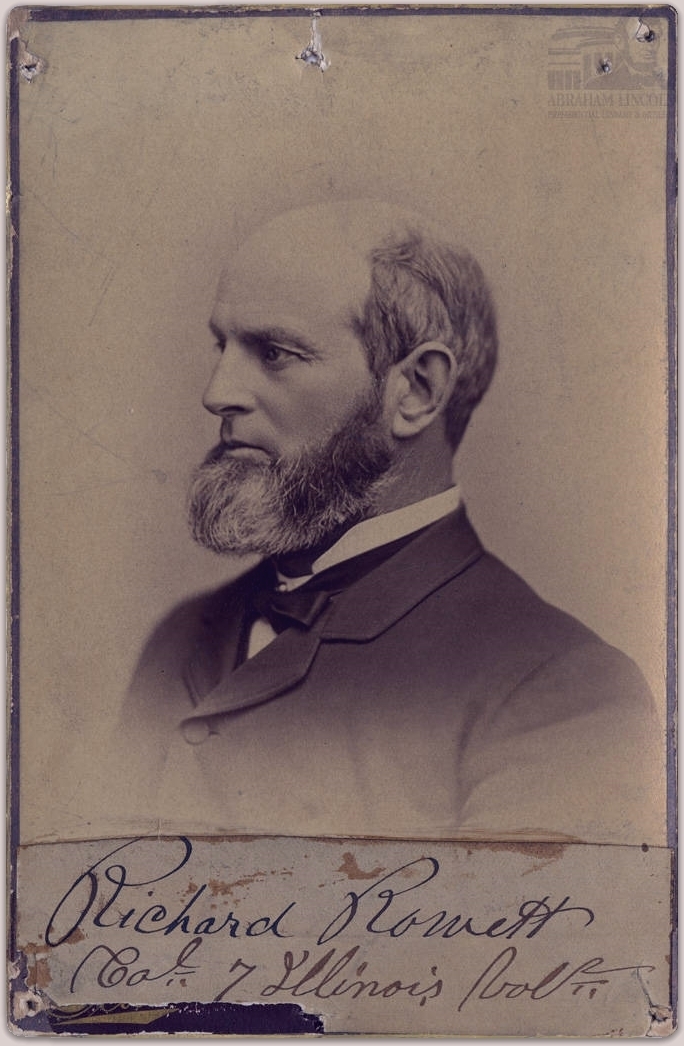
One of the greatest annual events in American sports is the Saturday is the Kentucky Derby, which will be run for the 152nd time this Saturday. One past champion was bred in Macoupin County.
This week marks 137 years since the victory of Spokane, who captured the 1889 Kentucky Derby during the infancy of the event. The horse was bred at “The Meadows,” the farm of Gen. Richard Rowett one mile north of Carlinville.
Rowett horses, and their jockey colors of orange jacket and blue cap, were on tracks throughout the west and south. But Spokane was the greatest production of The Meadows, a nationally recognized breeding ground for thoroughbreds.
In 1885, a prized dark brown horse named Hyder Ali was standing at The Meadows when Rowett bred him to one of his top mares, Interpose. This pairing had produced favorable offspring in the past, including Grey Cloud, a fine racer owned by Noah Armstrong of the Doncaster Ranch near Twin Bridges in the Montana Territory.
Armstrong’s famous stable included such horses as Lord Raglan, the third-place finisher in the 1883 Kentucky Derby. When Rowett offered Interpose for sale late in 1885, Armstrong, familiar with the high quality of Rowett stock, purchased the pregnant mare and her suckling filly, Madelin, for the price of $1,000 and shipped the brood to Montana.
The Doncaster Ranch was known for its spectacular, three-story round barn that featured an indoor track. While in Spokane in the Washington Territory on business, Armstrong received word of the birth of Interpose’s colt. In honor of the city, he named the colt Spokane.
Spokane showed great promise as a two-year-old, winning two of five starts in 1888, and Armstrong entered him in the 1889 Kentucky Derby. Although a premier race, the Derby had not achieved the monumental status it enjoys today.
The race was run on May 9, 1889–a Thursday–in front of a crowd of 25,000, a fraction of the throngs that fill Churchill Downs today.
Home state favorite Proctor Knott was the overwhelming favorite at 1-to-2, while the relatively unknown Spokane was listed at 10-to-1 odds. That was enough for Frank James, brother of outlaw Jessie and a regular at countless tracks.
James, flush with a windfall of $2,400 from an earlier race that day, asked a bookmaker of the odds on Spokane. The reply was “Ten-to-one and the sky’s the limit.” James threw down $5,000 on Spokane, causing the bookmaker to reply, “As far as I’m concerned, that’s the sky!”
Under jockey Thomas Kiley, Spokane edged Proctor Knott by a head, setting a record at 2:34 ½ over the mile-and-a-half layout (it was changed to a mile and a quarter in 1896). He remains the only Kentucky Derby winner ever born in Montana.
Proving the win was no fluke, Spokane again beat Proctor Knott five days later at the Clark Stakes in Louisville. On June 22, Spokane won another key race of the era, the American Derby at Washington Park in Chicago, to become the first horse to win both races in the same season.
Back in Illinois, Rowett did not live to see the triumph of Spokane, as he died on July 13, 1887. His death was covered on page one of the New York Times the following day.
In addition to breeding, Rowett is also remembered as the first to introduce the true-bred beagle hound to this country from his native England. Prior to that, he was a Civil War officer and state politician.
The only horse actually born in Illinois to win the Kentucky Derby was the 1970 champion, Dust Commander.
Tom Emery of Carlinville, who wrote the award-winning biography Richard Rowett: Thoroughbreds, Beagles, and the Civil War, may be reached at 217-710-8392 or ilcivilwar@yahoo.com.
Comments


-
 Community News3 days ago
Illinois treasurer to help Macoupin County residents reclaim $8.6 million in unclaimed funds on May 13 at Gillespie Library
-

 Community News4 days ago
MCHS slates drive-through dinner on May 13
-

 Obituaries4 days ago
Obituary of Mathew Dwayne Spickerman
-

 Obituaries3 days ago
Obituary of Roberta “Bobbi” Haneghan