

Community News
Class action suit claims mine owners violated biometric information protection law


A class-action lawsuit filed last month in Macoupin County Circuit Court claiming that the owners of Shay Coal Mine No. 1, located between Gillespie and Carlinville, and Deer Run Mine near Hillsboro violated provisions of the state’s biometric information privacy act (BIPA) when it required miners to clock in and clock out of their shifts using time clocks that captured images of their hands could generate damages in the hundreds of thousands of dollars if plaintiffs’ attorneys are successful in pressing the claim.
The suit, filed Aug. 16, in Macoupin County Circuit Court by St. Louis attorneys Brandon Wise and Paul A. Lesko, claims the defendants—Macoupin Energy and Maryan Mining, both based in rural Carlinville, and Hillsboro Energy and Patton Mining, both based in Hillsboro—violated miners’ rights when they allegedly began using handprints for miners to clock in and clock out. Primary plaintiffs are Robert Yeske, a Montgomery County man who worked at the Shay No. 1 Mine from 2011 to December 2016, Dan Hopley, a Cass County man who worked as a miner at the Deer Run Mine from 2010 to August 2015, and Ronald Stout, a Madison County man who was a miner at Deer Run from May 2012 to late 2014. In addition, the suit identifies a “class” of plaintiffs similarly situated as the primary plaintiffs. The size of the class is not known, according to the suit, and will be determined from records the defendants are expected to produce for the court. The suit speculates, however, that the class of plaintiffs—including former and current miners—may exceed 200. Some of those plaintiffs are included, the suit says, because they may have been precluded from filing suit on their own because of fear of reprisals from the companies for which they work.
BIPA specifies damages for violations of the act in the amount of $1,000 per incident or actual damages, whichever is greater. With each employee clocking in and clocking out once each day they worked, the amount of the damages sought could amount to $2,000 per day for each day each of the more than 200 employees used the biometric time clocks to clock in and out of their shifts.
[pullquote]The amount of the damages sought could amount to $2,000 per day for each day each of the more than 200 employees used the biometric time clocks to clock in and out of their shifts.[/pullquote]
In addition to a monetary judgment, the suit seeks an injunctive order requiring the defendants to comply with provisions of BIPA if they are found to be in violation of the law.
The suit demands a jury trial.
The Illinois General Assembly passed BIPA in 2008, but the Macoupin County lawsuit appears to be one of only a handful of suits filed statewide to define the limits of the relatively new law. In essence, BIPA precludes private entities from collecting and storing biometric data without getting advance permission in writing. The law defines biometric data as such things as handprints, fingerprints and retina scans—biological attributes that are specific to particular individuals. Preventing the misuse of biometric data is important to lawmakers and individuals because biometrics are increasingly being used to confirm identity in financial transactions and because of the potential for biometric data to be used to facilitate identity theft if it falls into the wrong hands. Among other things, the legislation attempts to control the potential for private parties who collect biometric data from selling that data to third parties.
In the past, social security numbers have been vulnerable to identity theft, but in the event a social security number is compromised there are remedies to correct the situation, according to the suit. “A person can obtain a new social security number, but not a new hand, which makes the protection and control over biometric data particularly important,” the lawsuit argues.
According to the suit, BIPA requires private parties who intend to collect biometric data to obtain a written release from the subjects of such collection prior to initiating the practice. It also requires the entities to disclose in writing the purpose of collecting the data, how it will be used, how long it will be stored and how long it will be kept once the need for it has expired. The law precludes private parties from coercing or forcing individuals to consent to the collection of biometric data and requires the collectors of biometric data to disclose who has access to the information.
[pullquote]The suit demands a jury trial.[/pullquote]
The suit alleges the defendants “captured, collected, stored and recorded biometric information of their Illinois employees without properly obtaining a written executed release and without making required disclosures concerning the collection, storage, use or destruction of the information.”
The plaintiffs’ attorneys argue that they want to use the court to determine on behalf of the primary plaintiffs and the class whether the defendants’ conduct has violated BIPA, whether the conduct was negligent, reckless or willful, and whether the plaintiffs are entitled to damages and injunctive relief. Further, the suit seeks to clarify whether the defendants obtained written executed releases from its employees before capturing biometric information, whether the defendants disclosed in writing the length of time biometric data would be stored and used, whether a written release from employees was a condition of their employment, and whether the defendants disclosed a written policy for destroying biometric data when the initial purpose for collecting it has been satisfied or within three years of the individual last interaction with the entity collecting the data.
While the suit was filed about a month ago, it only recently became available for public review. The file was temporarily held by Circuit Judge Kenneth R. Deihl pending an order to grant the use of a special process server to serve summons of the suit on the defendants. That order was signed Aug. 28 and the case was returned to the general file.
Comments







Community News
Benld prepares to celebrate 72nd annual Italian American Days over Memorial Day weekend

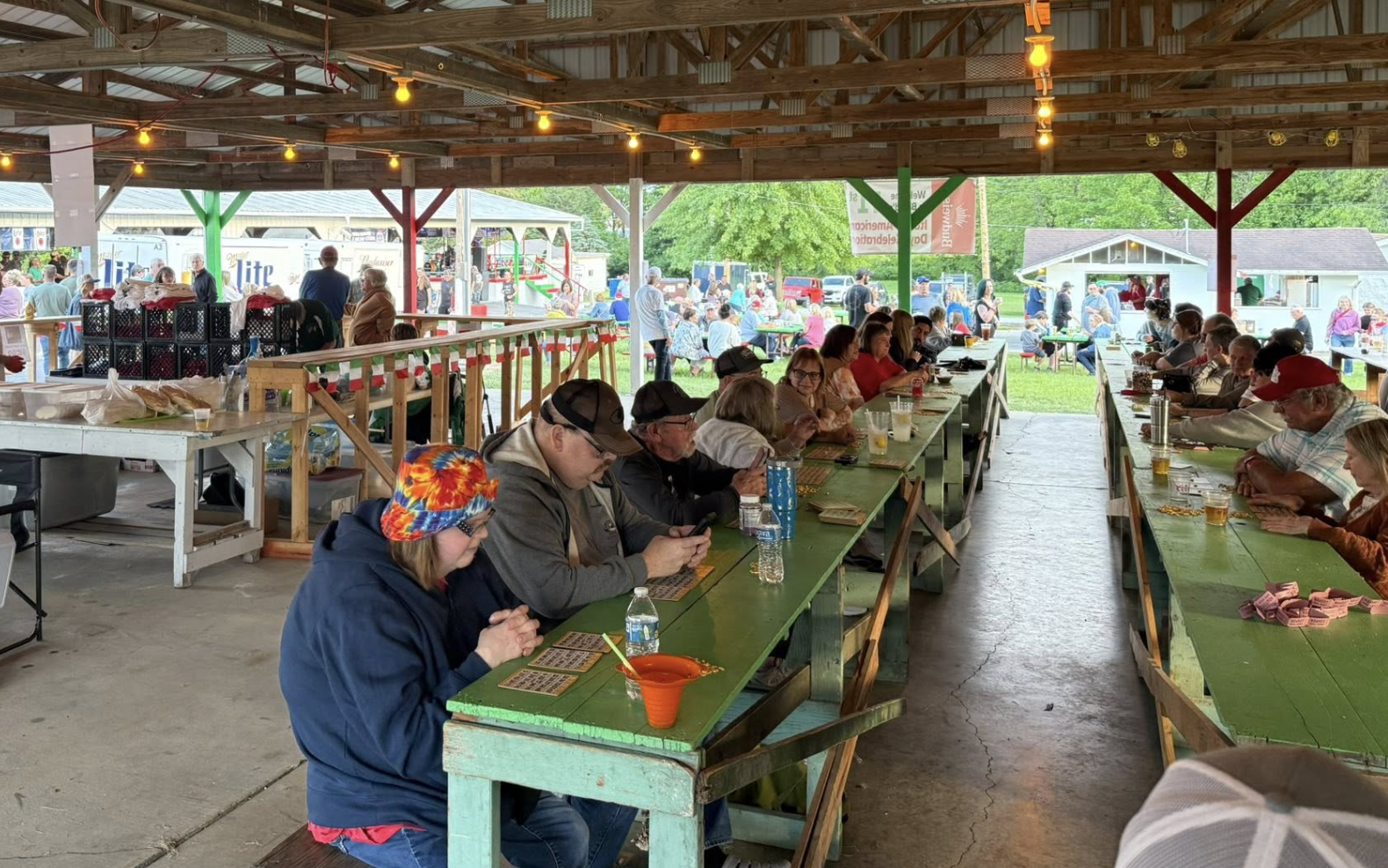
A beloved community tradition returns this Memorial Day weekend as the 72nd Annual Benld Italian-American Days brings three days of food, music, and family fun to Benld City Park from Friday, May 22 through Sunday, May 24.
Hosted by the Italian Club of Benld, the long-running festival celebrates the area’s rich Italian heritage while welcoming visitors from across the region for a full slate of activities.
Festivalgoers can expect a wide variety of homemade Italian favorites served throughout the weekend, including salami and meatball sandwiches, tortellini soup, bagna cauda, and cannoli. A daily fish fry featuring cod and whiting will also be available, along with classic festival fare such as hamburgers, hot dogs, Italian beef, and carnival treats. Beer, wine, and soda will be available for purchase.
In addition to the food, the event will feature carnival rides provided by Conner Family Amusement, Inc., with unlimited ride sessions offered throughout the weekend. Bingo will be held nightly at 7:00 p.m., and festival-themed shirts will be available for purchase.
Live music and dancing will take center stage each evening. Friday night entertainment includes a performance by Flip the Frog from 6:30 to 10:30 p.m., with the park open from 4:00 to 11:00 p.m.
Saturday highlights include the Italian Club Car Show, with registration from 8:00 a.m. to noon and judging beginning at noon. The park opens at 11:00 a.m., and live music will feature Pat Jones in the afternoon followed by Borderline in the evening.
Sunday kicks off with the “Meatballs on the Run” 5K at 9:00 a.m., sponsored by the Gillespie Cross Country Boosters. You can sign-up to participate online here. The day continues with free spaghetti served from 11:00 a.m. to 1:30 p.m., a bocce ball tournament beginning at noon, and a full lineup of live music throughout the day, including performances by Unbroken, Syner-Gee, and B&B Strings.
Connors Family Amusements will provide carnival armbands for $30. Armbands will be valid Friday (May 22) from 6:00 to 10 :00 p.m. and again on Saturday (May 23rd) and Sunday (May 24th) from 12:00 to 4:00 p.m. and again from 6:00 to 10:00 p.m, Advanced armband sales will be available from May 4th through May 21st at the Frank Bertetti Public Library and Benld City Hall for $25. Debit and Credit Cards will NOT be accepted.
Organizers note that no outside beverages are permitted in the park or at club events.
With its mix of tradition, entertainment, and community spirit, the 72nd Annual Benld Italian-American Days promises to once again be a highlight of the summer season in Macoupin County. For more information and updates, follow the festival on Facebook at Benld Italian American Days.
Comments

Gillespie will host a Community Blood Drive with ImpactLife, the provider of blood components for local hospitals. The blood drive will be from 1:00 pm to 6:00 pm on Monday, May 11 at 900 Broadway, inside Gillespie Methodist Church Gym.
To donate, please contact Brenda Lowe at (217) 7101336 or visit www.bloodcenter.org and use code 60020 to locate the drive. Appointments are requested. You may also call ImpactLife at 800-747-5401 to schedule.
Potential donors must be at least 17 years of age (16 with parental permission form available
through www.bloodcenter.org) and weigh more than 110 pounds. A photo I.D. is required to donate.
For questions about eligibility, please call ImpactLife at (800) 7475401. Donors who last gave blood on or before March 16, 2026, are eligible to give at this drive.
Blood donation is a safe, simple procedure that takes about 45 minutes to one hour. Individuals with diabetes or controlled high blood pressure may be accepted as eligible donors.
ImpactLife is a nonprofit community organization providing blood products and services to more than 100 hospitals and emergency medical service providers in Illinois, Iowa, Missouri, and Wisconsin, as well as researchers and resource sharing partners across the country.
Comments

Members of the Community Unit School District 7 Board of Education on Wednesday night approved a package of four capital improvement projects totaling more than $160,000 in value. Work will start on the projects after the end of the current school year and is expected to be completed before the start of the 2026-27 academic year in August.
The board met on Wednesday night after Monday’s inclement weather forced the district to reschedule the board’s regular monthly meeting.
The board approved entering into a contract with Fisher Tracks, Boone, Iowa, to resurface the district’s all-weather track at a cost of $105,209. Supt. Shane Owsley told the board the district will use about $50,000 from an all-weather track activity fund, with the remainder to be paid with proceeds from an alternate revenue bond issue approved last year for capital improvements.
Great Western Abatement, Jerseyville, was retained to remove flooring containing asbestos from the choir room floor and middle school gymnasium school at a cost of $40,700. Great Western’s bid was the lowest of seven bids, ranging up to $65,000, submitted for the work. Additionally, the district is paying $8,900 to Reliable Environmental Services, Springfield, for engineering and design work associated with the asbestos removal.
All-purpose rubberized flooring material will be installed on the middle school gym floor by Dynamic Sports Construction, Leander, Texas, at a cost of $51,424.
For the first time in a number of years, the high school gymnasium floor will be sanded and refinished with new artwork. Blast Technologies, St. Louis, was hired to sand the 4,200-square-foot floor at a cost of $5,250. Designs Unlimited, Pinckneyville, will paint game lines and logos on the floor before sealing it with a clear stain at a cost not to exceed $18,738.
The board also accepted a bid of $33,890 from DeLaurent Construction, Wilsonville, to resurface the 118,700-square-foot parking lot at Benld Elementary School.
Though no action was taken, Board President Mark Hayes reported that the Building and Grounds Committee had directed Owsley to investigate the cost of replacing the CUSD 7 administrative building.
“This building is very much in need of replacement,” Hayes said. “It’s beyond its time.” During Monday’s torrential rainfall, Hayes said water came in through windows and water seeped in under the sill plate, bringing displaced nightcrawlers into the building. Staff members ran fans after the storm in an effort to dry out the interior.
According to Hayes, the school has been in contact with the local Baptist Church to investigate the possibility of acquiring the former Trinity Baptist Church for use as an administrative building. Church officials, however, have not yet made a decision about the fate of the former sanctuary after Gillespie’s two Baptist churches merged.
Owsley said the current administrative building comprises about 6,000 square feet. Current estimates are $400 per square foot for new construction which would translate into about $2.5 million to replace the administrative facility. The district might be able to shave some dollars off that estimate by reducing the size of the building.
“There’s a lot of unusable space in this building,” Owsley said, suggesting a more efficient floorpan could reduce cost. He also mentioned the possibility of a basement to provide storage space for outdated documents.
In addition to construction costs, Owsley noted, the district would be responsible for tearing down the existing building.
“I have no idea what’s in this building,” Owsley said, raising abatement concerns. “I’m guessing disposal of this building is going to be expensive.”
Hayes said Kevin Wills, the district’s bond issue advisor, will attend the June board meeting to discuss the possibility of refinancing some existing bonds to free up enough revenue to build a new administrative building. The administration currently is housed in a “temporary” structure that has served as the administration building for several decades.
MINE SUBSIDENCE STUDY
After several minutes of discussion, the board took no action in relation to entering into a contract with Marino Engineering and Associates to assess the district’s risk for incurring damage from a mine subsidence event. Owsley said existing maps show that portions of Gillespie Middle School are undermined. While the high school is not undermined, a major subsidence would likely damage the high school as well as the middle school. In recent months, more than one residential home on Elm Street near the school property has experienced damage from mine subsidence.
Marino’s $94,000 Phase I proposal would “determine the likelihood of something happening to one of our buildings,” Owsley said. The problem is that too much information could negatively impact the district’s ability to purchase subsidence insurance. “Information is great until it’s not.”
The district currently pays about $300,000 for mine subsidence insurance on the middle school, high school and vocational arts building. The school carries no subsidence insurance on BenGil Elementary because mine shafts under the building were grouted before the school was built.
“If we find out there’s not a major concern,” Owsley noted, it could reduce the district’s subsidence insurance costs.
On the other hand, if the study reveals a high risk of experiencing mine subsidence, the insurer could drop the district at the end of the current policy’s term. With only two companies in the country offering subsidence insurance, the district could end up with no insurance at all to cover damage from mine subsidence.

The only way to avoid that scenario would be to implement whatever options Marino might recommend to reduce risk. Those recommendations would likely include grouting (backfilling) mine shafts under the middle school. Grouting for the elementary school cost $4 million. To grout under the middle school would likely run as much as $6 million or more.
The only way the study would make sense, Owsley suggested, would be if the district was “comfortable making the corrections the study is going to make.”
Moreover, $94,000 would cover only a preliminary assessment.
“To get a full understanding of what’s going on underground, we’d be looking at a half million dollars,” said Owsley.
The issue was allowed to die when no board member moved to consider the contract.
COMMUNITY SOLAR PARTICIPATION
On a motion by Bill Carter, seconded by Weye Schmidt, the board voted unanimously to enter into a contract with Summit Ridge Solar to participate in a community solar project. Under terms of the 15-year contract, the district will realize a 13 percent savings on electrical power bills. The contract is automatically renewable for five years unless the district chooses to withdraw.
“Illinois provides a number of incentives for using solar,” Owsley said. “However, not everyone likes the look of having solar panels on their property. This will get us the benefits without putting up solar panels on our property.”
Summit Ridge’s proposal was the most lucrative of the proposals the district received. Other companies offered shorter terms with savings of five percent.
After 20 years, it’s likely the savings would drop to five percent. Owsley said he was told the district was better off going with the longer contract to get 13 percent in savings for as long as possible.
The school district was able to secure such favorable rates, according to Owsley is because there is an issue with solar fields storing the power they generate. “Our main usage time is during their maximum production time.”
DISTRICT FOCUS
During a District Focus segment, the board recognized sophomore Matrix Wright, whose art was the only entry from the United States included in the 2026 TOLI International Student Art Exhibition. The exhibition is a project of The Olga Lengyel Institute for Holocaust Studies in New York. The exhibit includes student art relating to themes associated with the Holocaust.
Wright’s work, entitled “An Immortal Continuum,” attempts to portray “the constant entrapment a Holocaust survivor might feel.”
Exhibition organizers received more than 250 entries from around the globe.
BUDGET PROCESS
On a motion by Peyton Bernot, seconded by Board President Hayes, board members voted unanimously to begin work on developing a district budget for fiscal 2027. Board members also approved a routine measure to permit expenditure of fiscal 2027 funds after July 1, pending approval of a new budget.
The school district’s fiscal year runs from July 1 to June 30 but new budgets typically are approved two to four months after the start of the fiscal year.
The current fiscal year’s $19 million budget was approved in September last year.
PERSONNEL
Following a one-hour executive session to discuss personnel and other issues, the board voted unanimously to approve the request of long-time middle school English and language arts teacher Kim Henderson, effective at the end of the 2028-29 school year.
Board members also voted unanimously to hire Andrew Crook as a first-year, non-tenured high school English teacher for the 2026-27 school year, pending documentation of certification and a routine background check. A graduate of Gillespie High School, Crook earned his teaching certificate at Illinois College, Jacksonville and for the past two years, he taught English at North Mac High School.
In separate actions, the board made multiple assignments to staff the district’s summer school program. Those hired include: Jessica Kelly as a middle school teacher, Ashlee Gibbs as a high school math teacher, and Jennifer Brown and Rob Macias as high school drivers’ education instructors. Each of the positions are contingent upon adequate student enrollment to offer the classes. In addition to academic staff, the board hired Andy Hirstein as a summer school food service worker.
The board voted unanimously to accept the resignation of Foli Seferi as high school paraprofessional and as assisted football coach. Both resignations are effective immediately.
In other personnel action, the board appointed Cate Plovich as the BenGil Elementary School yearbook sponsor, and appointed Josh Ross as a volunteer assistant football coach, pending documentation of certification and a routine background check.
OTHER ACTION
In other action, the board:
• Approved a mens highs school soccer coop with the Carlinville School District, with the provision Carlinville will dissolve the agreement if it pushes its program into a higher competitive classification.
• Approved an intergovernmental agreement with Lewis and Clark Community College under which the college will recognize some high school courses as college level credits.
• Approved early graduation requests for an undisclosed number of students, provided all graduation requirements are met.
• Approved renewing the district’s membership in the Illinois Elementary Schools Association.
• Approved the final calendar for the 2025-26 school year pending no further emergency days. Barring the use of emergency days, Monday, May 18 will be the last day of student attendance, with graduation ceremonies set at 2 p.m., Sunday, May 17.
Comments


-
 Community News4 days ago
Illinois treasurer to help Macoupin County residents reclaim $8.6 million in unclaimed funds on May 13 at Gillespie Library
-

 Obituaries4 days ago
Obituary of Roberta “Bobbi” Haneghan
-

 Community News4 days ago
Carlinville’s Dixon signs as UDFA with Patriots
-

 Community News3 days ago
School board approves $160,000 in capital improvement project