

Community News
Gillespie Council approves $280,000 tax levy, debates absenteeism


Brenda Masters, CPA, presented the city’s annual audit.
The Gillespie City Council on Monday night approved a tax levy totaling $280,140, but it was the routine matter of approving meeting dates for 2016 that provoked the most heated discussion. The council also accepted the city’s annual audit and approved the purchase of workers compensation insurance and liability insurance on the dams impounding the new and old Gillespie lakes at a cost that is about 50 percent higher than last year.
The 2016 meeting schedule approved by the council calls for the council to meet at 6 p.m. on Monday, Jan. 11, Feb. 8, March 14, April 11, May 9, June 13, July 11, Aug. 8, Sept. 12, Oct. 11, Nov. 14 and Dec. 12. The Public Works, Safety and Finance committees will meet at 6 p.m., Monday, Jan. 25, Feb. 22, March 28, April 25, May 23, June 27, July 25, Aug. 22, Sept. 26, Oct. 24, Nov. 28 and Dec. 26. Additional Finance Committee meetings are set for 10 a.m., Friday, Jan. 8, Feb. 5, March 11, April 8, May 6, June 10, July 8, Aug. 5, Sept. 9, Oct. 7, Nov. 10 and Dec. 9.
[pullquote]I can’t just take off. I’m a supervisor, plus we have to have a certain number of cars on patrol in the county at all times.[/pullquote]Annual approval of the meeting schedule typically is a routine matter, but before the vote, Ward 3 Ald. Roger Diveley said there were a number of meetings on the schedule he could not attend because of work commitments. Diveley is employed as a Macoupin County Sheriff’s deputy and currently is working a 12-hour night shift from 6 p.m. to 6 a.m. The work schedule will conflict with a significant number of the council’s scheduled meetings in 2016.
“I work, plain and simple,” Diveley said. “My schedule is set for 2016. I can’t just take off. I’m a supervisor, plus we have to have a certain number of cars on patrol in the county at all times.”
Diveley said he was aware of comments on social media about his frequent absences from council meetings, and he alleged some members of the council had talked about the issue “behind my back.”
“I wish people would come to me and talk to me about it in person,” he said.
City Treasurer Dan Fisher countered that running for a seat on the council obligated Diveley to attend meetings. “If you can’t do it, you need to quit,” Fisher said, citing previous examples of city aldermen who resigned their seats when their work schedules changed and created a conflict with regular attendance at city council meetings.
“I disagree with that,” Diveley countered, adding that much of the job, in his view, involved fielding citizen concerns and responding to complaints.
Fisher agreed that constituent service is part of the job, but at its core, the position of alderman is a “legislative duty.”
“You can’t fulfill that if you can’t make it to the meetings,” he said.
Ald. Steve Kluthe commented that when an alderman misses a number of consecutive meetings, that alderman is not privy to discussion that may have taken place prior to the time when a specific issue comes up for a vote. “If you don’t have all the information from the previous meetings, you can’t make an informed decision,” Kluthe said.
“Fine,” Diveley said, “this will be my last meeting.” He later said he was angry when he made the statement and would further explore whether or not he should resign from the council.
“I come when I can,” he said. “My first priority is my family. Personally, I don’t think my whole job is just sitting here at this table.”
[pullquote]To be their representative, you have to be here[/pullquote]Fisher argued that an alderman, by definition, is a representative of the people in his or her ward. “To be their representative, you have to be here,” Fisher said.
Diveley was first elected without opposition in 2011 and was re-elected to a second term this year. When he first ran, he said, his schedule permitted him to attend council meetings. When he ran this year, he said he had decided that if anyone else filed for election, he would step aside, in part because of his inability to attend meetings on a regular basis. “No one else wants the job,” he said, adding that he called the City Clerk’s office before the filing deadline to see if anyone else would run for the seat.
Mayor John Hicks brought the discussion to a close, saying, “There’s the meeting schedule. If you can’t make it to the meetings, you have to decide if you need to submit your resignation. It’s your call.”
Brought to a vote, the meeting schedule was approved 6-1 with Diveley voting no.
TAX LEVY & AUDIT
Council members voted unanimously to approve the tax levy for the fiscal year beginning May 1, 2016. There were no members of public present to comment on the proposed levy during a brief public hearing set 15 minutes before the start of the regular council meeting.
The new levy calls for the following amounts to be generated from property taxes for the following line items: Corporate, $45,956; Police Protection, $19,782; Street & Bridge, $26,802; Emergency Services and Disaster Administration, $7,657; Liability Insurance, $44,669; Parks, $11,486; Municipal Band, $2,552; Social Security, $80,405; and Library, $40,841.
The council also unanimously accepted the city’s annual audit, which was performed by Fleming & Tawfall Certified Public Accountants, Litchfield. Brenda Masters, an accountant with the firm, distributed copies of the audit and briefly discussed its findings. There apparently were no findings or recommendations for improving the city’s accounting methods. In fact, Masters complimented Krystal Norville, assistant City Clerk, for the records she provided to complete the audit.

[pullquote]There apparently were no findings or recommendations for improving the city’s accounting methods.[/pullquote]According to Masters, the city’s position for cash on hand has been steadily improving over the past five years. Referring to a summary sheet she distributed to council members, Masters said the city’s governmental cash reserves has grown by a rate of about $100,000 annually, from $342,340 in 2011 to $812,458 as of April 30 this year. Moreover, the city has retired nearly $38,000 in long-term governmental debt in the last five years. With notes receivable and capital assets, the city’s total governmental equity now stands at nearly $1.7 million.
Masters also noted that revenues and expenditures for water and sewer have remained relatively stable over the past five years. She took note of a significant jump in expenditures for salaries related to the Lake Account, from about $41,000 in fiscal 2014 to $77,363 at the end of the past fiscal year on April 30. That increase, however, was explained by allocating salary costs when workers from other departments performed work at the lake.
“It makes sense to do that,” she said. “You can raise rates to meet expenses easier than you can magically raise taxes.”
WORKERS COMPENSATION AND DAM INSURANCE
After several minutes of discussion, the council voted to buy Workers Compensation coverage through the Illinois Public Risk Fund and liability insurance for the dams at both Gillespie lakes through One Beacon, an insurance company that exclusively insures government owned properties. The total annual premium for both policies will be $112,284–nearly 50 percent higher than the previous year’s expenditure of about $83,000.
“That’s a pretty good pop up,” said City Treasurer Dan Fisher.
Matt Gazda with Gazda Insurance Agency, Carlinville, said the city has had a good record with Illinois Public Risk for Workers Compensation. Rates have remained stable despite a substantial claim arising from the Water Department. The new rate for Workers Compensation, he said, will be $33,353, which is only slightly more than the previous year’s premium costs.
[pullquote]The total annual premium for both policies will be $112,284–nearly 50 percent higher than the previous year’s[/pullquote]In 2011, the city insured the lake dams through HCC Insurance, also brokered by the Gazda agency. However, Gazda said HCC’s underwriters have concerns about liability risks for the dams and have declined to offer insurance for them. In the alternative, Gazda presented Jeff Link of Diamond Brothers Insurance, Carlinville, who offered the city the option of buying liability insurance through One Beacon at a cost of $78,931 per year. According to Link, the policy is for liability only and does not offer coverage for replacing a dam should one of the dams be breached. Additionally, the policy offers no protection for the loss of revenue the city would incur if the Water Department could no longer provide water to its customers. Additionally, the policy offers no supplemental mine subsidence insurance and no coverage for earthquake damage.
Link said properties downstream from the new lake dam that could be damaged in the event of a breach include a couple of residences, a bridge, farmland and a few outbuildings. Based on those potential losses, the policy would pay up to $1 million per incident, with an aggregate ceiling of $3 million.
There is no insurance available for the dams themselves, according to Link. “They won’t insure dirt is what they told us,” he said.
City Treasurer Fisher, Mayor Hicks and some of the aldermen expressed concerns about the lack of business interruption insurance.
“A million dollars wouldn’t make us whole,” Fisher said. “If we lost the lake, we’d be out of water in a day and a half. There’s all sorts of liability questions.”
Asked whether less expensive coverage might be available through the Illinois Municipal League, Link said IMl probably would not consider bidding on coverage for the city.
“They don’t like to work with smaller cities,” he said, “and they don’t like to bid and get beat, which is what happened the last couple of times. They wouldn’t even talk to us.”
Faced with a current policy that expires at the end of the year, the council opted to accept the policies presented by Gazda and Link despite the significantly higher costs, and directed Link to look into the cost of supplemental mine subsidence and earthquake insurance, as well as coverage for business interruption. The business interruption policy would be for the Water Department as a whole. Ostensibly, the policy would cover the loss of business the city might incur in event the water treatment plant or distribution system is disabled for any reason, not just the loss of a dam.
LAKE LEASES
On a motion by Kluethe, seconded by Ald. Frank Barrett, the council approved an amendment to a lake lot lease belonging to Rita Smith to allow her grandson, Casey Smith, to live at her permanent residence on the lake for a probationary period of six months and the end of which the council will review the issue and determine whether a previously imposed ban should be rescinded. Both Rita Smith and Casey Smith attended the meeting to plead their case for the action.
Kluethe said Casey Smith was barred from lake property in 2004 because of behavior issues. He did not go into detail regarding the nature of the complaint against Smith.
“I was 17 years old at the time,” Smith told the council. “I was a bad kid and I had a lot of problems.” In the decade since he was barred, Smith said he has matured. He has sole custody of his young son, he said. Earlier this year, he said he lost his job and is now working part-time 25 hours a week. He said he and his son want to be able to live with his grandmother temporarily until he can get back on his feet.
“I don’t cause a problem,” he said. “I’m inside most of the time.”
Rita Smith said she wanted the council to approve the measure. “I really don’t have much of anyone else to help me,” she said.
Kluethe said both he and Barrett had interviewed Casey Smith and were of the opinion that the ban could be lifted.
“Due to the amount of time that has passed, I think we can lift the bar and let him live there,” Kluethe said.
“Teenagers mature,” Barrett offered.
Fisher argued, however, that there is no clear protocol for revoking the ban. He asked about who would make the determination at the end of six months whether or not Smith would be added to the lease and what criteria would be used to make that determination. He also questioned whether the council would proceed in the same way if the circumstances were to arise again with other lake tenants.
“We’re painting ourselves into a very uncomfortable corner,” Fisher said.
Barrett commented that in 2004, the “hammer” used to enforce the ban was the threat to revoke Rita Smith’s lease and evict her. She was allowed to keep her lease on the condition that her grandson did not enter onto lake property.
“Our action in 2004 worked,” Barrett said.
In a related matter, the council voted to amend the ordinance regarding permanent lake residences to permit leaseholders to maintain permanent status while using the cabin as a part-time residence as long as that period of part-time residency does not exceed five years. The change was made to accommodate Charles and Diane Patterson, who purchased a permanent residence cabin with the intent of using it as a part-time residence until the time of Charles Patterson’s retirement, at which time they planned to use the cabin as a full-time residence. Previously, city ordinance dictated that permanent residence lots would revert to part-time lots if the owner did not live at the lake full-time.
Charles Patterson said the change was acceptable, though he wasn’t sure he would be able to retire in five years. His current target for retirement is eight years.
“What happens then?” he asked. “Do we come back and do this again?’
“We can’t make any representation as to what a council will do in five years,” City Attorney Kevin Polo said.
Also related to lake lots, the council unanimously approved an ordinance to increase lot rent from $600 per year to $900 per year–the first increase enacted in 12 years. Lake Committee Chair Barrett said the increase will affect about 30 lake residents.
Fisher suggested the Lake Committee should consider an ordinance to increase the rental periodically, based on the rate of inflation or some other factor.
“The $900 rate is fine, but I think we need to key this more to how it affects our overall revenues,” Fisher said. “Twelve years is too long to wait.”
FOP CONTRACT
Following a brief executive session to discuss collective bargaining, the council voted unanimously to approve a new contract with the Fraternal Order of Police, the union that represents Police Department employees. The three-year contract calls for raises of two percent in the first and second year, and one percent for the third year. Additionally, the new contract eliminates a $500 sign-on bonus.
The council formerly awarded the contract to replace two deteriorating culverts on Cedar Street to Baxmeyer Construction of Waterloo. Baxmeyer was the low bidder when bids were opened in October with a bid of $169,799.25. The council had delayed awarding the bid at that time because of uncertainty about whether the city would have enough funds available to do both projects.
Mayor Hicks indicated Monday night that the city would be able to do both culverts.
Fisher reported that one of the culverts will require some work to be done on a sewer main at the same time. While city workers might be able to do that work, he suggested it would be more efficient to approve change orders to allow Baxmeyer to do the work once the culvert project begins.
In other action, the council:
- Approved Christmas bonuses of $50 for full-time employees and $25 for part-time employees.
- Agreed to donate $1,000 to a vocational entrepreneurship program at Gillespie High School.
- Agreed to donate $1 per student for an Adopt-A-Class program through Community Unit School District 7.
- Agreed to renew a contract with Homefield Energy to supply electricity for city facilities for one year at a rate of about 5.1 cents per kilowatt.
– – – – – – – – – – – – – –
There are plenty of ways to keep up on BenGil news:
Sign up for our weekly email newsletter
Follow us on Twitter for the fastest breaking news updates and score updates
Like us on Facebook for a slightly different take
Comments












Gillespie will host a Community Blood Drive with ImpactLife, the provider of blood components for local hospitals. The blood drive will be from 1:00 pm to 6:00 pm on Monday, May 11 at 900 Broadway, inside Gillespie Methodist Church Gym.
To donate, please contact Brenda Lowe at (217) 7101336 or visit www.bloodcenter.org and use code 60020 to locate the drive. Appointments are requested. You may also call ImpactLife at 800-747-5401 to schedule.
Potential donors must be at least 17 years of age (16 with parental permission form available
through www.bloodcenter.org) and weigh more than 110 pounds. A photo I.D. is required to donate.
For questions about eligibility, please call ImpactLife at (800) 7475401. Donors who last gave blood on or before March 16, 2026, are eligible to give at this drive.
Blood donation is a safe, simple procedure that takes about 45 minutes to one hour. Individuals with diabetes or controlled high blood pressure may be accepted as eligible donors.
ImpactLife is a nonprofit community organization providing blood products and services to more than 100 hospitals and emergency medical service providers in Illinois, Iowa, Missouri, and Wisconsin, as well as researchers and resource sharing partners across the country.
Comments

Members of the Community Unit School District 7 Board of Education on Wednesday night approved a package of four capital improvement projects totaling more than $160,000 in value. Work will start on the projects after the end of the current school year and is expected to be completed before the start of the 2026-27 academic year in August.
The board met on Wednesday night after Monday’s inclement weather forced the district to reschedule the board’s regular monthly meeting.
The board approved entering into a contract with Fisher Tracks, Boone, Iowa, to resurface the district’s all-weather track at a cost of $105,209. Supt. Shane Owsley told the board the district will use about $50,000 from an all-weather track activity fund, with the remainder to be paid with proceeds from an alternate revenue bond issue approved last year for capital improvements.
Great Western Abatement, Jerseyville, was retained to remove flooring containing asbestos from the choir room floor and middle school gymnasium school at a cost of $40,700. Great Western’s bid was the lowest of seven bids, ranging up to $65,000, submitted for the work. Additionally, the district is paying $8,900 to Reliable Environmental Services, Springfield, for engineering and design work associated with the asbestos removal.
All-purpose rubberized flooring material will be installed on the middle school gym floor by Dynamic Sports Construction, Leander, Texas, at a cost of $51,424.
For the first time in a number of years, the high school gymnasium floor will be sanded and refinished with new artwork. Blast Technologies, St. Louis, was hired to sand the 4,200-square-foot floor at a cost of $5,250. Designs Unlimited, Pinckneyville, will paint game lines and logos on the floor before sealing it with a clear stain at a cost not to exceed $18,738.
The board also accepted a bid of $33,890 from DeLaurent Construction, Wilsonville, to resurface the 118,700-square-foot parking lot at Benld Elementary School.
Though no action was taken, Board President Mark Hayes reported that the Building and Grounds Committee had directed Owsley to investigate the cost of replacing the CUSD 7 administrative building.
“This building is very much in need of replacement,” Hayes said. “It’s beyond its time.” During Monday’s torrential rainfall, Hayes said water came in through windows and water seeped in under the sill plate, bringing displaced nightcrawlers into the building. Staff members ran fans after the storm in an effort to dry out the interior.
According to Hayes, the school has been in contact with the local Baptist Church to investigate the possibility of acquiring the former Trinity Baptist Church for use as an administrative building. Church officials, however, have not yet made a decision about the fate of the former sanctuary after Gillespie’s two Baptist churches merged.
Owsley said the current administrative building comprises about 6,000 square feet. Current estimates are $400 per square foot for new construction which would translate into about $2.5 million to replace the administrative facility. The district might be able to shave some dollars off that estimate by reducing the size of the building.
“There’s a lot of unusable space in this building,” Owsley said, suggesting a more efficient floorpan could reduce cost. He also mentioned the possibility of a basement to provide storage space for outdated documents.
In addition to construction costs, Owsley noted, the district would be responsible for tearing down the existing building.
“I have no idea what’s in this building,” Owsley said, raising abatement concerns. “I’m guessing disposal of this building is going to be expensive.”
Hayes said Kevin Wills, the district’s bond issue advisor, will attend the June board meeting to discuss the possibility of refinancing some existing bonds to free up enough revenue to build a new administrative building. The administration currently is housed in a “temporary” structure that has served as the administration building for several decades.
MINE SUBSIDENCE STUDY
After several minutes of discussion, the board took no action in relation to entering into a contract with Marino Engineering and Associates to assess the district’s risk for incurring damage from a mine subsidence event. Owsley said existing maps show that portions of Gillespie Middle School are undermined. While the high school is not undermined, a major subsidence would likely damage the high school as well as the middle school. In recent months, more than one residential home on Elm Street near the school property has experienced damage from mine subsidence.
Marino’s $94,000 Phase I proposal would “determine the likelihood of something happening to one of our buildings,” Owsley said. The problem is that too much information could negatively impact the district’s ability to purchase subsidence insurance. “Information is great until it’s not.”
The district currently pays about $300,000 for mine subsidence insurance on the middle school, high school and vocational arts building. The school carries no subsidence insurance on BenGil Elementary because mine shafts under the building were grouted before the school was built.
“If we find out there’s not a major concern,” Owsley noted, it could reduce the district’s subsidence insurance costs.
On the other hand, if the study reveals a high risk of experiencing mine subsidence, the insurer could drop the district at the end of the current policy’s term. With only two companies in the country offering subsidence insurance, the district could end up with no insurance at all to cover damage from mine subsidence.
The only way to avoid that scenario would be to implement whatever options Marino might recommend to reduce risk. Those recommendations would likely include grouting (backfilling) mine shafts under the middle school. Grouting for the elementary school cost $4 million. To grout under the middle school would likely run as much as $6 million or more.
The only way the study would make sense, Owsley suggested, would be if the district was “comfortable making the corrections the study is going to make.”
Moreover, $94,000 would cover only a preliminary assessment.
“To get a full understanding of what’s going on underground, we’d be looking at a half million dollars,” said Owsley.
The issue was allowed to die when no board member moved to consider the contract.
COMMUNITY SOLAR PARTICIPATION
On a motion by Bill Carter, seconded by Weye Schmidt, the board voted unanimously to enter into a contract with Summit Ridge Solar to participate in a community solar project. Under terms of the 15-year contract, the district will realize a 13 percent savings on electrical power bills. The contract is automatically renewable for five years unless the district chooses to withdraw.
“Illinois provides a number of incentives for using solar,” Owsley said. “However, not everyone likes the look of having solar panels on their property. This will get us the benefits without putting up solar panels on our property.”
Summit Ridge’s proposal was the most lucrative of the proposals the district received. Other companies offered shorter terms with savings of five percent.
After 20 years, it’s likely the savings would drop to five percent. Owsley said he was told the district was better off going with the longer contract to get 13 percent in savings for as long as possible.
The school district was able to secure such favorable rates, according to Owsley is because there is an issue with solar fields storing the power they generate. “Our main usage time is during their maximum production time.”
DISTRICT FOCUS
During a District Focus segment, the board recognized sophomore Matrix Wright, whose art was the only entry from the United States included in the 2026 TOLI International Student Art Exhibition. The exhibition is a project of The Olga Lengyel Institute for Holocaust Studies in New York. The exhibit includes student art relating to themes associated with the Holocaust.
Wright’s work, entitled “An Immortal Continuum,” attempts to portray “the constant entrapment a Holocaust survivor might feel.”
Exhibition organizers received more than 250 entries from around the globe.
BUDGET PROCESS
On a motion by Peyton Bernot, seconded by Board President Hayes, board members voted unanimously to begin work on developing a district budget for fiscal 2027. Board members also approved a routine measure to permit expenditure of fiscal 2027 funds after July 1, pending approval of a new budget.
The school district’s fiscal year runs from July 1 to June 30 but new budgets typically are approved two to four months after the start of the fiscal year.
The current fiscal year’s $19 million budget was approved in September last year.
PERSONNEL
Following a one-hour executive session to discuss personnel and other issues, the board voted unanimously to approve the request of long-time middle school English and language arts teacher Kim Henderson, effective at the end of the 2028-29 school year.
Board members also voted unanimously to hire Andrew Crook as a first-year, non-tenured high school English teacher for the 2026-27 school year, pending documentation of certification and a routine background check. A graduate of Gillespie High School, Crook earned his teaching certificate at Illinois College, Jacksonville and for the past two years, he taught English at North Mac High School.
In separate actions, the board made multiple assignments to staff the district’s summer school program. Those hired include: Jessica Kelly as a middle school teacher, Ashlee Gibbs as a high school math teacher, and Jennifer Brown and Rob Macias as high school drivers’ education instructors. Each of the positions are contingent upon adequate student enrollment to offer the classes. In addition to academic staff, the board hired Andy Hirstein as a summer school food service worker.
The board voted unanimously to accept the resignation of Foli Seferi as high school paraprofessional and as assisted football coach. Both resignations are effective immediately.
In other personnel action, the board appointed Cate Plovich as the BenGil Elementary School yearbook sponsor, and appointed Josh Ross as a volunteer assistant football coach, pending documentation of certification and a routine background check.
OTHER ACTION
In other action, the board:
• Approved a mens highs school soccer coop with the Carlinville School District, with the provision Carlinville will dissolve the agreement if it pushes its program into a higher competitive classification.
• Approved an intergovernmental agreement with Lewis and Clark Community College under which the college will recognize some high school courses as college level credits.
• Approved early graduation requests for an undisclosed number of students, provided all graduation requirements are met.
• Approved renewing the district’s membership in the Illinois Elementary Schools Association.
• Approved the final calendar for the 2025-26 school year pending no further emergency days. Barring the use of emergency days, Monday, May 18 will be the last day of student attendance, with graduation ceremonies set at 2 p.m., Sunday, May 17.
Comments

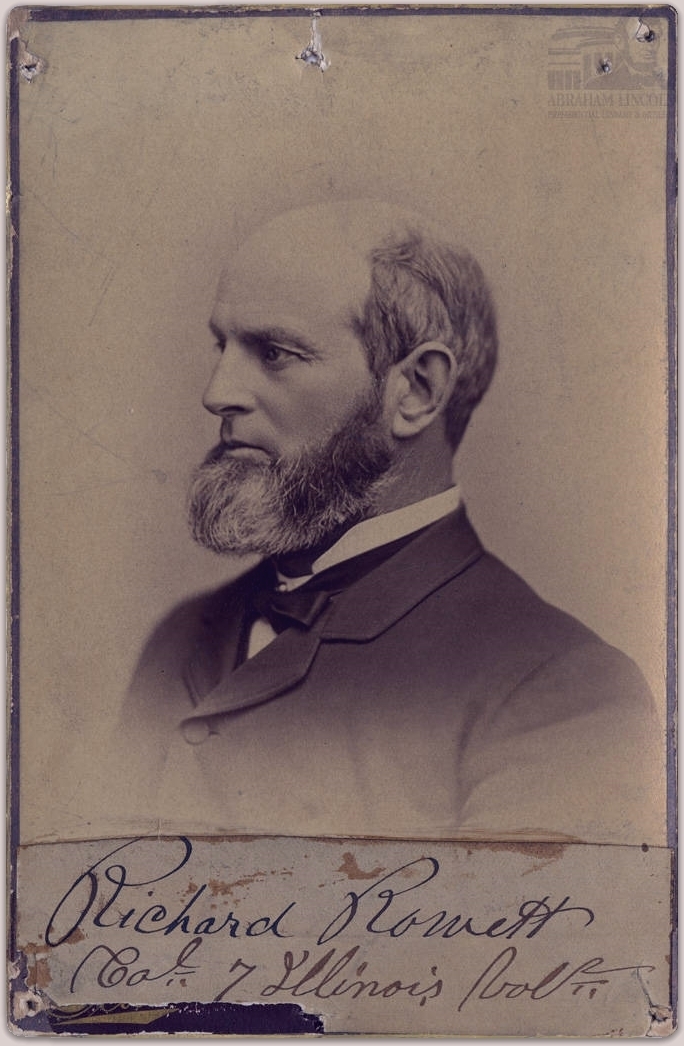
One of the greatest annual events in American sports is the Saturday is the Kentucky Derby, which will be run for the 152nd time this Saturday. One past champion was bred in Macoupin County.
This week marks 137 years since the victory of Spokane, who captured the 1889 Kentucky Derby during the infancy of the event. The horse was bred at “The Meadows,” the farm of Gen. Richard Rowett one mile north of Carlinville.
Rowett horses, and their jockey colors of orange jacket and blue cap, were on tracks throughout the west and south. But Spokane was the greatest production of The Meadows, a nationally recognized breeding ground for thoroughbreds.
In 1885, a prized dark brown horse named Hyder Ali was standing at The Meadows when Rowett bred him to one of his top mares, Interpose. This pairing had produced favorable offspring in the past, including Grey Cloud, a fine racer owned by Noah Armstrong of the Doncaster Ranch near Twin Bridges in the Montana Territory.
Armstrong’s famous stable included such horses as Lord Raglan, the third-place finisher in the 1883 Kentucky Derby. When Rowett offered Interpose for sale late in 1885, Armstrong, familiar with the high quality of Rowett stock, purchased the pregnant mare and her suckling filly, Madelin, for the price of $1,000 and shipped the brood to Montana.
The Doncaster Ranch was known for its spectacular, three-story round barn that featured an indoor track. While in Spokane in the Washington Territory on business, Armstrong received word of the birth of Interpose’s colt. In honor of the city, he named the colt Spokane.
Spokane showed great promise as a two-year-old, winning two of five starts in 1888, and Armstrong entered him in the 1889 Kentucky Derby. Although a premier race, the Derby had not achieved the monumental status it enjoys today.
The race was run on May 9, 1889–a Thursday–in front of a crowd of 25,000, a fraction of the throngs that fill Churchill Downs today.
Home state favorite Proctor Knott was the overwhelming favorite at 1-to-2, while the relatively unknown Spokane was listed at 10-to-1 odds. That was enough for Frank James, brother of outlaw Jessie and a regular at countless tracks.
James, flush with a windfall of $2,400 from an earlier race that day, asked a bookmaker of the odds on Spokane. The reply was “Ten-to-one and the sky’s the limit.” James threw down $5,000 on Spokane, causing the bookmaker to reply, “As far as I’m concerned, that’s the sky!”
Under jockey Thomas Kiley, Spokane edged Proctor Knott by a head, setting a record at 2:34 ½ over the mile-and-a-half layout (it was changed to a mile and a quarter in 1896). He remains the only Kentucky Derby winner ever born in Montana.
Proving the win was no fluke, Spokane again beat Proctor Knott five days later at the Clark Stakes in Louisville. On June 22, Spokane won another key race of the era, the American Derby at Washington Park in Chicago, to become the first horse to win both races in the same season.
Back in Illinois, Rowett did not live to see the triumph of Spokane, as he died on July 13, 1887. His death was covered on page one of the New York Times the following day.
In addition to breeding, Rowett is also remembered as the first to introduce the true-bred beagle hound to this country from his native England. Prior to that, he was a Civil War officer and state politician.
The only horse actually born in Illinois to win the Kentucky Derby was the 1970 champion, Dust Commander.
Tom Emery of Carlinville, who wrote the award-winning biography Richard Rowett: Thoroughbreds, Beagles, and the Civil War, may be reached at 217-710-8392 or ilcivilwar@yahoo.com.
Comments


-
 Community News3 days ago
Illinois treasurer to help Macoupin County residents reclaim $8.6 million in unclaimed funds on May 13 at Gillespie Library
-

 Community News5 days ago
MCHS slates drive-through dinner on May 13
-

 Obituaries5 days ago
Obituary of Mathew Dwayne Spickerman
-

 Obituaries4 days ago
Obituary of Roberta “Bobbi” Haneghan