

Community News
Local school board explores working cash bonds



CUSD #7 school board members (L-R): Peyton Bernot, Don Dobrino, Jenni Alepra and secretary Kathy McDaniels. (Archived Photo)
Facing the prospect of delayed state aid payments due to the continuing budget stalemate in Springfield, members of the Community Unit School District 7 Board of Education on Monday night listened to an extensive presentation about the possibility of issuing working cash bonds, though Superintendent Joe Tieman emphasized there are no immediate plans to seek a bond issue.
“This is for information only. I’m not asking for any action from the board,” Tieman said. “Unless you’ve been living under a rock, I think everyone knows the situation with the state and it is my responsibility to look at every possible revenue stream that we can tap into if we need to. About 65 percent of our budget comes from state sources so it is critically important to for us to look at this.”
Kevin R. Wills, vice president at First Midstate, Inc., the company that has handled previous bond sales for the district, told board members the school district could issue a maximum of $2.4 million in working cash bonds without exceeding the district’s state-imposed debt ceiling or affecting the district’s bonding capacity. Issuing the bonds would require a three-step process starting with a resolution approved by the board and a public notice initiating a 30-day public review process. During the 30-day review period, citizens could petition the board for a public referendum. That petition would require signatures representing 10 percent of voters who voted in the previous school board election. With or without a petition, the board would conduct a public hearing at the end of 30 days before officially voting to sell the bonds.
The authority to issue working cash bonds, once enacted by the board, would remain valid for a period of three years. In other words, the board could secure the authority to issue the bonds without voting immediately to issue them, choosing to issue them later when it is determined the working cash funds are needed. Moreover, Wills said, while the resolution would authorize bonds in amounts “up to” $2.4 million, the board could vote to issue a lesser amount.
[pullquote]The resolution would authorize bonds in amounts “up to” $2.4 million, the board could vote to issue a lesser amount.[/pullquote]”The working cash fund is a legal form of borrowing for school districts in Illinois,” Wills said, noting that working cash usually is used to resolve cash flow issues when expenditures must be made before tax funds are made available to the district. Because of the stalemate that has left the State of Illinois without a budget since July 1, there are concerns the state will not be able to make tax payments to local school districts in a timely manner even if a budget is approved in the near future. “Most of the school districts consider working cash fund bonds at this time are considering them for cash flow issues.”
Referring to a detailed 12-page report, Wills said the maximum amount the board can levy for debt service is $420,512.
“That’s a major limiting factor we have to work with moving forward,” Wills said. Regardless of the amount of working cash bonds ultimately issued, the repayment schedule would have to be structured so that the repayment schedule (combined with the district’s current debt repayment obligations) does not exceed the ceiling. Answering a question from board member Dave Griffel, Wills admitted it would be unlikely the district could issue working cash bonds in any substantive amount without increasing the tax levy.
“It would be a challenge to issue bonds without a tax increase,” he said. “No matter how it’s structured you’re probably going to see some kind of increase, if not at the beginning (of the repayment period), then in the later years. There’s a philosophical issue to consider in balancing the impact on the tax rate vs. taking a long time to pay it off.”
As an example, he said the district could take as long as 20 years to pay off the bond issue. “But what if the money gets spent in four years?” he said. “Then you’re paying on for the next 16 years.”
In theory, he suggested, it might be more prudent to consider a shorter pay-back period even though the impact on tax rates could be greater than if the bond issue was spread out over a longer period.
The district’s current tax extension of about $800,000 could grow to $1.2 million for “several years” if the district issued the maximum amount of working cash bonds, Griffel noted. “That’s pretty substantial.”
Also answering a question from Griffel, Wills said the process for obtaining revenue from a working cash bond issue would be about two months, provided no petitions are submitted to require a referendum election. In that event, the next election during which the referendum question could be presented to voters is the upcoming March 15 primary. To ensure the question appears on that ballot, Wills said, the board would need to adopt a Resolution of Intent to issue working cash bonds at least 122 days prior to the election, meaning the resolution would have to be voted upon by Nov. 14.
“If the board wants to do this without a referendum, that date is meaningless?” Tieman asked.
“Yes,” Wills responded.
Church allows school to use new parking lot
In other action, the board voted to authorize Tieman to negotiate with the Gillespie United Methodist Church’s Board of Trustees to draft an agreement allowing parents and visitors to use the church parking lot in exchange for the school district providing snow removal services for the lot during the winter months. Board member Griffel, who is a member of the church, abstained from the vote. Tieman noted that parents already are using the parking lot, located directly east of the elementary school, when they bring their children to school. It also apparently is being used when the school has special events and the school lot is not large enough to accommodate visitors.
Tieman also recommended extending a sidewalk from the school property line to the church parking lot so parents bringing children to school are not required to walk in the street.
Once the agreement is finalized, Tieman will present it to the board for final approval.
Personnel and student matters
In the area of personnel, the board voted to accept the resignation of Mark Hayes as head boys’ soccer coach and to post the position as vacant. Hayes, who serves as the board president, abstained from the vote.
Guidance Counselor Kalli Baker reported to the board regarding the school’s participation in a couple of high school Explorers programs that allow students to visit professional settings to explore potential career choices. Baker reported that 19 students are participating in a six-session Explorers program at Memorial Medical Center in Springfield, and nine are participating in an Engineering Explorers program that included a visit to the construction site for a new bridge over the Illinois River at Meredosia.
“One of the things we’ve talked about is trying to get students outside the walls of our school,” Tieman commented. Apart from providing students with information about careers they may want to pursue as adults, the programs also give the students a sense of independence and confidence, according to Tieman. “Programs like these are examples of putting students outside of their normal school environment. I urge the staff to continue to seek new opportunities for programs like this and I urge the board to support these programs.”

Board hears report on CEO program
The board also heard a brief report about the school district’s possible participation in a county-wide Creating Entrepreneurial Opportunities (CEO) program. The two-credit course, based on a prototype that started in Effingham, is designed to teach students how to start, fund and operate a new business. Ultimately, only 20 students will be chosen from among the county’s nine school districts to participate.
“We’re very excited about this,” Tieman said. “I will be asking the board at a later date for approval for us to participate.”
Jenni Alepra, a board member who is employed as branch manager at United Community Bank, said UCB is involved as a financial contributor for the program and that the Gillespie School District has been chosen as one of four home bases in the county for the program. Students will be required to submit a formal application for consideration to participate.
Grade point averages will not be a consideration in the application process, Alepra said. “Some of the best entrepreneurial minds are not among your 4.0 students,” she said. “They’re students who think outside the box.”
The board will be asked to take formal action on the CEO program after the State Board of Education approves the course description for inclusion in the curriculum for Macoupin County schools.
Superintendent’s Report
Tieman reported that neither he nor any of the board members will attend an upcoming convention of Illinois School Boards. Only three of the seven board members were going to be able to attend because of prior commitments, he said. As a result, it was decided to “save the money” and forego attendance this year with an eye toward taking the full board to the convention in 2016.
Tieman also reported that Building Trades program received a donation of $1,180 for the purchase of a new power saw from Margaret Friel, a Springfield woman who saw an article about the program appearing in the State Journal-Register.
Tieman said the school now expects results from tests given last year by the Partnership for Assessment of Readiness for College and Careers (PARCC) in the next two months. PARCC officials now say results from high school exams should arrive in November, followed by middle school scores in December.
“It is a crime for our staff not to have the data (from the PARCC exams) before now to guide curriculum decisions,” Tieman commented.
Tieman reported to the board that he had responded to a Freedom of Information Act request from the Better Government Association seeking documents related to the collective bargaining agreement, administrator contracts, budget, legal settlements and payroll. Tieman directed the BGA to the district’s website where some of the information requested is posted and provided copies of the documents that do not appear on the website.
Board members also voted unanimously to pay the district’s September bills in the following amounts: Education Fund, $31,357.89; Building and Operations Fund, $38,607.98; Transportation, $4,323.45, for a total of $74,289.32.
Tieman also reported to the board that work is nearing completion on the dugouts for the school’s softball field, a sidewalk has been poured and bleachers have been ordered. The field should be completed and ready for use, he said, in time for this spring’s softball season. He also reported that a new heating/air conditioning control system is being installed at the high school and should result in greater comfort levels and efficiency. He said the system is expected to pay for itself in energy savings in about five years.
NEXT MEETING: The District #7 school board will meet again on November 23, 2015, at 7 p.m.
– – – – – – – – – – – – – –
There are plenty of ways to keep up on BenGil news:
Sign up for our weekly email newsletter
Follow us on Twitter for the fastest breaking news updates and score updates
Like us on Facebook for a slightly different take
Comments












Gillespie will host a Community Blood Drive with ImpactLife, the provider of blood components for local hospitals. The blood drive will be from 1:00 pm to 6:00 pm on Monday, May 11 at 900 Broadway, inside Gillespie Methodist Church Gym.
To donate, please contact Brenda Lowe at (217) 7101336 or visit www.bloodcenter.org and use code 60020 to locate the drive. Appointments are requested. You may also call ImpactLife at 800-747-5401 to schedule.
Potential donors must be at least 17 years of age (16 with parental permission form available
through www.bloodcenter.org) and weigh more than 110 pounds. A photo I.D. is required to donate.
For questions about eligibility, please call ImpactLife at (800) 7475401. Donors who last gave blood on or before March 16, 2026, are eligible to give at this drive.
Blood donation is a safe, simple procedure that takes about 45 minutes to one hour. Individuals with diabetes or controlled high blood pressure may be accepted as eligible donors.
ImpactLife is a nonprofit community organization providing blood products and services to more than 100 hospitals and emergency medical service providers in Illinois, Iowa, Missouri, and Wisconsin, as well as researchers and resource sharing partners across the country.
Comments

Members of the Community Unit School District 7 Board of Education on Wednesday night approved a package of four capital improvement projects totaling more than $160,000 in value. Work will start on the projects after the end of the current school year and is expected to be completed before the start of the 2026-27 academic year in August.
The board met on Wednesday night after Monday’s inclement weather forced the district to reschedule the board’s regular monthly meeting.
The board approved entering into a contract with Fisher Tracks, Boone, Iowa, to resurface the district’s all-weather track at a cost of $105,209. Supt. Shane Owsley told the board the district will use about $50,000 from an all-weather track activity fund, with the remainder to be paid with proceeds from an alternate revenue bond issue approved last year for capital improvements.
Great Western Abatement, Jerseyville, was retained to remove flooring containing asbestos from the choir room floor and middle school gymnasium school at a cost of $40,700. Great Western’s bid was the lowest of seven bids, ranging up to $65,000, submitted for the work. Additionally, the district is paying $8,900 to Reliable Environmental Services, Springfield, for engineering and design work associated with the asbestos removal.
All-purpose rubberized flooring material will be installed on the middle school gym floor by Dynamic Sports Construction, Leander, Texas, at a cost of $51,424.
For the first time in a number of years, the high school gymnasium floor will be sanded and refinished with new artwork. Blast Technologies, St. Louis, was hired to sand the 4,200-square-foot floor at a cost of $5,250. Designs Unlimited, Pinckneyville, will paint game lines and logos on the floor before sealing it with a clear stain at a cost not to exceed $18,738.
The board also accepted a bid of $33,890 from DeLaurent Construction, Wilsonville, to resurface the 118,700-square-foot parking lot at Benld Elementary School.
Though no action was taken, Board President Mark Hayes reported that the Building and Grounds Committee had directed Owsley to investigate the cost of replacing the CUSD 7 administrative building.
“This building is very much in need of replacement,” Hayes said. “It’s beyond its time.” During Monday’s torrential rainfall, Hayes said water came in through windows and water seeped in under the sill plate, bringing displaced nightcrawlers into the building. Staff members ran fans after the storm in an effort to dry out the interior.
According to Hayes, the school has been in contact with the local Baptist Church to investigate the possibility of acquiring the former Trinity Baptist Church for use as an administrative building. Church officials, however, have not yet made a decision about the fate of the former sanctuary after Gillespie’s two Baptist churches merged.
Owsley said the current administrative building comprises about 6,000 square feet. Current estimates are $400 per square foot for new construction which would translate into about $2.5 million to replace the administrative facility. The district might be able to shave some dollars off that estimate by reducing the size of the building.
“There’s a lot of unusable space in this building,” Owsley said, suggesting a more efficient floorpan could reduce cost. He also mentioned the possibility of a basement to provide storage space for outdated documents.
In addition to construction costs, Owsley noted, the district would be responsible for tearing down the existing building.
“I have no idea what’s in this building,” Owsley said, raising abatement concerns. “I’m guessing disposal of this building is going to be expensive.”
Hayes said Kevin Wills, the district’s bond issue advisor, will attend the June board meeting to discuss the possibility of refinancing some existing bonds to free up enough revenue to build a new administrative building. The administration currently is housed in a “temporary” structure that has served as the administration building for several decades.
MINE SUBSIDENCE STUDY
After several minutes of discussion, the board took no action in relation to entering into a contract with Marino Engineering and Associates to assess the district’s risk for incurring damage from a mine subsidence event. Owsley said existing maps show that portions of Gillespie Middle School are undermined. While the high school is not undermined, a major subsidence would likely damage the high school as well as the middle school. In recent months, more than one residential home on Elm Street near the school property has experienced damage from mine subsidence.
Marino’s $94,000 Phase I proposal would “determine the likelihood of something happening to one of our buildings,” Owsley said. The problem is that too much information could negatively impact the district’s ability to purchase subsidence insurance. “Information is great until it’s not.”
The district currently pays about $300,000 for mine subsidence insurance on the middle school, high school and vocational arts building. The school carries no subsidence insurance on BenGil Elementary because mine shafts under the building were grouted before the school was built.
“If we find out there’s not a major concern,” Owsley noted, it could reduce the district’s subsidence insurance costs.
On the other hand, if the study reveals a high risk of experiencing mine subsidence, the insurer could drop the district at the end of the current policy’s term. With only two companies in the country offering subsidence insurance, the district could end up with no insurance at all to cover damage from mine subsidence.
The only way to avoid that scenario would be to implement whatever options Marino might recommend to reduce risk. Those recommendations would likely include grouting (backfilling) mine shafts under the middle school. Grouting for the elementary school cost $4 million. To grout under the middle school would likely run as much as $6 million or more.
The only way the study would make sense, Owsley suggested, would be if the district was “comfortable making the corrections the study is going to make.”
Moreover, $94,000 would cover only a preliminary assessment.
“To get a full understanding of what’s going on underground, we’d be looking at a half million dollars,” said Owsley.
The issue was allowed to die when no board member moved to consider the contract.
COMMUNITY SOLAR PARTICIPATION
On a motion by Bill Carter, seconded by Weye Schmidt, the board voted unanimously to enter into a contract with Summit Ridge Solar to participate in a community solar project. Under terms of the 15-year contract, the district will realize a 13 percent savings on electrical power bills. The contract is automatically renewable for five years unless the district chooses to withdraw.
“Illinois provides a number of incentives for using solar,” Owsley said. “However, not everyone likes the look of having solar panels on their property. This will get us the benefits without putting up solar panels on our property.”
Summit Ridge’s proposal was the most lucrative of the proposals the district received. Other companies offered shorter terms with savings of five percent.
After 20 years, it’s likely the savings would drop to five percent. Owsley said he was told the district was better off going with the longer contract to get 13 percent in savings for as long as possible.
The school district was able to secure such favorable rates, according to Owsley is because there is an issue with solar fields storing the power they generate. “Our main usage time is during their maximum production time.”
DISTRICT FOCUS
During a District Focus segment, the board recognized sophomore Matrix Wright, whose art was the only entry from the United States included in the 2026 TOLI International Student Art Exhibition. The exhibition is a project of The Olga Lengyel Institute for Holocaust Studies in New York. The exhibit includes student art relating to themes associated with the Holocaust.
Wright’s work, entitled “An Immortal Continuum,” attempts to portray “the constant entrapment a Holocaust survivor might feel.”
Exhibition organizers received more than 250 entries from around the globe.
BUDGET PROCESS
On a motion by Peyton Bernot, seconded by Board President Hayes, board members voted unanimously to begin work on developing a district budget for fiscal 2027. Board members also approved a routine measure to permit expenditure of fiscal 2027 funds after July 1, pending approval of a new budget.
The school district’s fiscal year runs from July 1 to June 30 but new budgets typically are approved two to four months after the start of the fiscal year.
The current fiscal year’s $19 million budget was approved in September last year.
PERSONNEL
Following a one-hour executive session to discuss personnel and other issues, the board voted unanimously to approve the request of long-time middle school English and language arts teacher Kim Henderson, effective at the end of the 2028-29 school year.
Board members also voted unanimously to hire Andrew Crook as a first-year, non-tenured high school English teacher for the 2026-27 school year, pending documentation of certification and a routine background check. A graduate of Gillespie High School, Crook earned his teaching certificate at Illinois College, Jacksonville and for the past two years, he taught English at North Mac High School.
In separate actions, the board made multiple assignments to staff the district’s summer school program. Those hired include: Jessica Kelly as a middle school teacher, Ashlee Gibbs as a high school math teacher, and Jennifer Brown and Rob Macias as high school drivers’ education instructors. Each of the positions are contingent upon adequate student enrollment to offer the classes. In addition to academic staff, the board hired Andy Hirstein as a summer school food service worker.
The board voted unanimously to accept the resignation of Foli Seferi as high school paraprofessional and as assisted football coach. Both resignations are effective immediately.
In other personnel action, the board appointed Cate Plovich as the BenGil Elementary School yearbook sponsor, and appointed Josh Ross as a volunteer assistant football coach, pending documentation of certification and a routine background check.
OTHER ACTION
In other action, the board:
• Approved a mens highs school soccer coop with the Carlinville School District, with the provision Carlinville will dissolve the agreement if it pushes its program into a higher competitive classification.
• Approved an intergovernmental agreement with Lewis and Clark Community College under which the college will recognize some high school courses as college level credits.
• Approved early graduation requests for an undisclosed number of students, provided all graduation requirements are met.
• Approved renewing the district’s membership in the Illinois Elementary Schools Association.
• Approved the final calendar for the 2025-26 school year pending no further emergency days. Barring the use of emergency days, Monday, May 18 will be the last day of student attendance, with graduation ceremonies set at 2 p.m., Sunday, May 17.
Comments

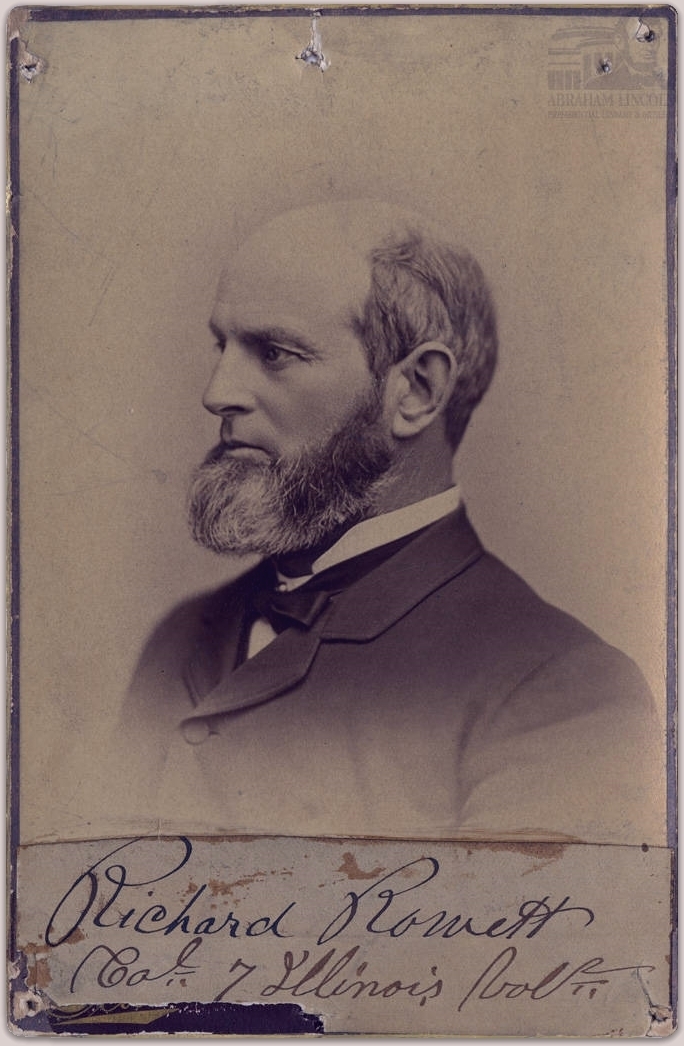
One of the greatest annual events in American sports is the Saturday is the Kentucky Derby, which will be run for the 152nd time this Saturday. One past champion was bred in Macoupin County.
This week marks 137 years since the victory of Spokane, who captured the 1889 Kentucky Derby during the infancy of the event. The horse was bred at “The Meadows,” the farm of Gen. Richard Rowett one mile north of Carlinville.
Rowett horses, and their jockey colors of orange jacket and blue cap, were on tracks throughout the west and south. But Spokane was the greatest production of The Meadows, a nationally recognized breeding ground for thoroughbreds.
In 1885, a prized dark brown horse named Hyder Ali was standing at The Meadows when Rowett bred him to one of his top mares, Interpose. This pairing had produced favorable offspring in the past, including Grey Cloud, a fine racer owned by Noah Armstrong of the Doncaster Ranch near Twin Bridges in the Montana Territory.
Armstrong’s famous stable included such horses as Lord Raglan, the third-place finisher in the 1883 Kentucky Derby. When Rowett offered Interpose for sale late in 1885, Armstrong, familiar with the high quality of Rowett stock, purchased the pregnant mare and her suckling filly, Madelin, for the price of $1,000 and shipped the brood to Montana.
The Doncaster Ranch was known for its spectacular, three-story round barn that featured an indoor track. While in Spokane in the Washington Territory on business, Armstrong received word of the birth of Interpose’s colt. In honor of the city, he named the colt Spokane.
Spokane showed great promise as a two-year-old, winning two of five starts in 1888, and Armstrong entered him in the 1889 Kentucky Derby. Although a premier race, the Derby had not achieved the monumental status it enjoys today.
The race was run on May 9, 1889–a Thursday–in front of a crowd of 25,000, a fraction of the throngs that fill Churchill Downs today.
Home state favorite Proctor Knott was the overwhelming favorite at 1-to-2, while the relatively unknown Spokane was listed at 10-to-1 odds. That was enough for Frank James, brother of outlaw Jessie and a regular at countless tracks.
James, flush with a windfall of $2,400 from an earlier race that day, asked a bookmaker of the odds on Spokane. The reply was “Ten-to-one and the sky’s the limit.” James threw down $5,000 on Spokane, causing the bookmaker to reply, “As far as I’m concerned, that’s the sky!”
Under jockey Thomas Kiley, Spokane edged Proctor Knott by a head, setting a record at 2:34 ½ over the mile-and-a-half layout (it was changed to a mile and a quarter in 1896). He remains the only Kentucky Derby winner ever born in Montana.
Proving the win was no fluke, Spokane again beat Proctor Knott five days later at the Clark Stakes in Louisville. On June 22, Spokane won another key race of the era, the American Derby at Washington Park in Chicago, to become the first horse to win both races in the same season.
Back in Illinois, Rowett did not live to see the triumph of Spokane, as he died on July 13, 1887. His death was covered on page one of the New York Times the following day.
In addition to breeding, Rowett is also remembered as the first to introduce the true-bred beagle hound to this country from his native England. Prior to that, he was a Civil War officer and state politician.
The only horse actually born in Illinois to win the Kentucky Derby was the 1970 champion, Dust Commander.
Tom Emery of Carlinville, who wrote the award-winning biography Richard Rowett: Thoroughbreds, Beagles, and the Civil War, may be reached at 217-710-8392 or ilcivilwar@yahoo.com.
Comments


-
 Community News4 days ago
Illinois treasurer to help Macoupin County residents reclaim $8.6 million in unclaimed funds on May 13 at Gillespie Library
-

 Community News5 days ago
MCHS slates drive-through dinner on May 13
-

 Obituaries5 days ago
Obituary of Mathew Dwayne Spickerman
-

 Obituaries4 days ago
Obituary of Roberta “Bobbi” Haneghan