This is the third article in a series. Read the first article here and the 2nd article here.
So where do we go from here? We know we’re going to have about $60,000 worth of expenses per year. We know there’s relatively little foot traffic on main street. We know we have to increase sales without sacrificing our gross margin or increasing our overhead. Small hurdles, but hurdles nonetheless.
Shop local is a good idea, but it doesn’t really solve the numbers game. It’s an awareness program, similar to a neighborhood watch-type initiative. Banks becoming more lenient with their loans would be nice, but once again adding a loan payment just adds to the expenses. If you’re not growing, the added loan payment is a band-aid that eventually becomes a burden. Grants are almost impossible to come by anymore. We’ve been waiting 2 years for the demolition of the buildings on main street. So we need something new, innovative, and feasible.
So here’s our idea. Stay with us for a moment. We know it’s outside the box, but we can’t keep doing the same things over and over again. Like Albert Einstein said, “Insanity: doing the same thing over and over again and expecting different results.”
What if someone would create an online site that had local news, a calendar of events, a classified ad section, a business directory, etc, and it would become the go-to online destination for residents in the area? Eventually, residents could watch live events from around the area right from their computer: school board meetings, GHS sports game, city council meetings, etc. Local doctors would be able to talk to patients right from their home, and patients would be able to request refills from the local pharmacies right on the site. Imagine if that site became every resident’s homepage on their computer, and they checked it 3-4 times per week.
Now imagine if a sister-site was created that allowed every brick and mortar store in Gillespie and Benld to sell their merchandise right on the web 24 hours per day, 7 days a week, all from the same site. Local shops wouldn’t have to depend on foot traffic, and more importantly wouldn’t have to depend on the local trading area. With the web, they can sell anything anywhere in the world. The online store wouldn’t add to their overhead, and would actually improve their gross margins. Better yet, at-home businesses that haven’t made the transition to a brick and mortar store could add an online store that will eventually become a brick and mortar store on main street.
Local shoppers wouldn’t have the excuse that they didn’t have time to shop between the usual 9am-5 pm hours. Now they could shop anytime they wanted, even from their pajamas. Local stores could carry a wider selection of merchandise without increasing its overhead. Items could be drop shipped directly from the wholesaler. How nice would it be to have a local tv repairman selling tv’s or a computer geek selling computers. With the amount of wholesalers and distributors available in the US, anything can be sold in Gillespie without the customary expenses of a brick and mortar store. And best of all, if an item is sold online by a Gillespie merchant to an area resident, the city gets that sales tax revenue.
Now let’s take it one step further. What if one of the empty buildings downtown would be donated to this program so at-home businesses could use the building as a storefront until they outgrow it. An at-home businesses that had growing sales on the web could then move into or even share with another at-home business the donated storefront on main street, and grow their brick and mortar store until they’re ready to go out on their own. It’d be a business incubator of sorts.
This isn’t so much a program, as it is a system. Create a business idea -> find a wholesaler/distributor -> add your site to the online e-commerce site -> start selling your merchandise -> grow your store -> move into the brick and mortar incubator on main street -> eventually grow your store enough that you can afford your own storefront on main street. If we can add 1-2 businesses per year, while maintaining our current businesses, main street Gillespie would look completely different in 5 years.
Are we guaranteeing this is going to work? Absolutely not. 50/50 at best. However, it’s completely different than anything else we’ve tried. Plus, from a financial standpoint, it’s feasible. It’d also be a perfect partner to a shop local program.
Seriously, how nice would it be to order anything you wanted online from a Gillespie merchant? Pipe dream? Maybe.
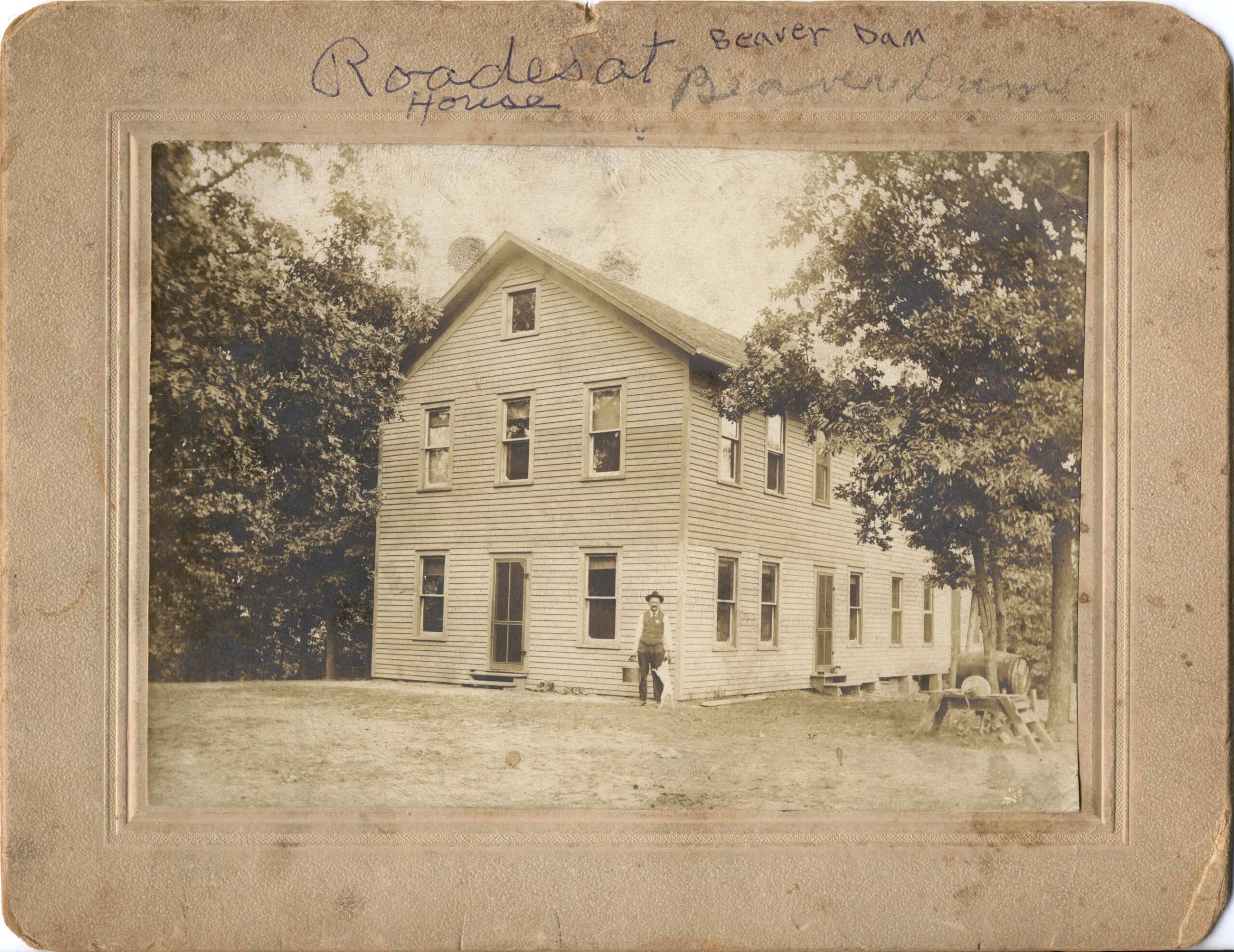
A view of the hotel at Beaver Dam, south of Carlinville, in the early 1900s. A landmark of the area, the hotel was a popular overnight spot until it closed in 1938.
A century ago, a hotel was a landmark at the area that became Beaver Dam State Park in south-central Macoupin County. The structure has lived on in various incarnations since it closed in 1938.
The two-story, sixteen-room building opened for business in 1906. The exterior of the white-frame structure was spartan in appearance, which likely reflected the interior. But the hotel was a favorite stopover for visitors to Beaver Dam Lake.
Advertisements for the hotel were found in the St. Louis, Alton, and Springfield papers and attracted guests from miles around. “There must have been some business there,” said Jim Frank of the Macoupin County Historical Society in an interview before his death in late 2024. “People came from all over to visit the lake and stay in the hotel.”
Frank, who lived south of Beaver Dam, notes that guests arrived by train from Macoupin Station, a mile to the north. “They would be met there by a horse-drawn coach,” he remarked. “That would take them up the hill to the hotel.”
Though the hotel was basic, its surroundings were scenic. A tree-lined lane met visitors on the approach to the building, which sat just inside the current park entrance, on the right.
The hotel was operated by Frank Rhoads and his wife Sarah, whose father, Henry Brayford, played a pivotal role in the development of the lake for recreational purposes.
In 1881, some eighteen leading Carlinville residents leased the property from Brayford to create the Beaver Dam Lake Club. The members spent an estimated $2600 to construct earthen dams on either end of the lake to raise the water level.
Brayford, a coal miner who began to sink a new mine in 1899, died of a lingering illness on Dec. 23, 1901 at age 84. When Frank and Sarah Rhoads inherited the property, they ended the lease to the Carlinville businessmen and built the hotel, which opened as the Beaver Dam Fishing Resort.
The Rhoads, who had no children, took extra steps to ensure their guests’ enjoyment. “Mrs. Rhoads was quite a musician,” said Frank. “There was a grand piano and an organ in the hotel parlor, and she would play those to entertain the visitors.”
It was not the only way in which Sarah Rhoads put her stamp on the hotel. When meals were served, she called the guests and fishermen inside by blowing a large fox horn that sounded across the lake. A taxidermist, her mounts of local wild animals were displayed in the hotel and in its guest rooms. She was also adept at photography and for a fee, provided photos of her guests and their catches of fish.
Guests to the lake could fish for a dollar per day, while lodging was two dollars per night. Outdoor camping was permitted, but Sarah, owing to customs of the day, would not allow female campers.
Some individuals tried to avoid the fishing fee by sneaking into the lake grounds. However, the Rhoads posted watchmen who would collect the fee as they scaled the fences.
The completion of the Shipman Blacktop in 1937 doomed the hotel, as many guests began to spend the day and drive home at night, rather than staying over. Fee fishing continued at the site for several years, In 1947, the state of Illinois acquired the 425-acre property, which opened to the public as a state park the following year.
The second floor of the hotel was torn off, and the rest was converted into a residence for park rangers. The state also reconstructed and raised the earthen dams to create a lake of 56.5 acres. In 1955, additional land was acquired, boosting the park to 737 acres.
When capital improvements were made to Beaver Dam State Park in the late 2000s, the old hotel structure was sold to area residents and moved off site. The building now sits on private property.
Tom Emery is a freelance writer and historical researcher from Carlinville, Ill. He may be reached at 217-710-8392 or ilcivilwar@yahoo.com.
When people think of protests, especially in small, conservative towns, they often imagine tension, anger, or conflict. But what I’ve experienced at our local protests is something else entirely.
There’s music playing. People are smiling, waving, and offering encouragement. Cars pass by and honk in support. There’s laughter, conversations, and a shared sense of purpose. It’s not chaotic. It’s not hostile. It’s community.
These protests have become a place where people come together to feel connected and hopeful. We don’t just hold signs. We bring canned goods for food pantries. We share resources. We check in on each other. Many of us also make a point to support local small businesses before and after the protests , grabbing coffee, dinner, or doing some shopping…. because we know they’re part of this community too.
For many of us, especially those who’ve felt isolated in our beliefs, these gatherings are a lifeline.
I’ve had countless people tell me how much this helps them. They say coming out to protest gets them off their phones, away from the news, and back into the world with purpose. They feel less alone. Less hopeless. I see it in myself too. Being around like-minded people, standing for something that matters, has improved my own mental health. Protesting reminds us that we can still make a difference.
This isn’t about causing division. It’s about connection. It’s about choosing to take action instead of watching history repeat itself while we sit by in silence. For many of us, this is about making sure our kids, neighbors, and future generations know we tried.
When I first had the idea to bring protests to Macoupin County, I reached out to Andi Smith in February. She had already taken the brave first step of standing with a sign in Edwardsville, and her quiet courage lit the way for so many of us. Andi has been a lighthouse of support, not just for me, but for others who are learning how to use their voice. She didn’t do it for attention. She did it because it was the right thing to do. And that kind of leadership matters.
Now, we have weekly protests across the region. And it all started with someone deciding to show up. That’s how movements begin. That’s how change starts. Not all at once, but with one person and then another.
I invite you to join us at our weekly protest every Tuesday from 5:00–7:00 p.m. at the Macoupin County Courthouse in Carlinville. We are building this movement with love, hope, and action. I’m proud to be working alongside Kelley Hatlee and organizations like The 50501 Movement, Macoupin Pride, Macoupin County Action Alliance, and Indivisible.
Weekly protests take place rain or shine every Sunday in Alton from 12 noon to 2 p.m. at the Lincoln Douglas Square, every Tuesday in Carlinville from 5 to 7 p.m. at the Macoupin County Courthouse, and every Friday from 12 noon to 2 p.m. in Edwardsville at the City Park. I encourage others to show up to one near them. You don’t need a crowd to begin. You don’t need permission to care. Just show up. Bring a sign. Start the conversation. You might be surprised how many people were waiting for someone else to take the first step.
Because when we show up, we remember who we are. And when we come together, we realize we were never alone.
There is common ground for those who voted for, or against, Donald Trump to be President of the United States again. First, we can all agree that he won the election. Second, Kamala Harris did not whine and lie to the American people that she really won. And third, since it was a free democratic election, the American people will get the government they deserve.
For those citizens who feel disappointed that a majority of voters chose as their leader a demagogue who believes the rule of law does not apply to him, your duty now is to bear witness to the consequences. And remember. For history’s sake.
Stay awake as the herd nods off, and avoids evidence of an insurrection that happened before their very eyes. Observe the idiot wind that blows constantly from the mouths of all those Trump-pets pretending that traitors are patriots. Don’t fall for the false equivalencies, like convincing you that their retribution is the same as real justice.
And stop thinking about King Rump. Entertainment is his game. He’s the best at keeping everyone distracted while he performs his con. He knows what he’s doing. Also, don’t waste your time trying to convince your friends and relatives who have slid down the rabbit hole of self-delusion. This election proved Mark Twain was right when he observed: “It is easier to fool a man, than to convince him he has been fooled.”
James Tweed
1512 Wesley Ave. Ocean City, NJ 08226 (609)398-3124