

Community News
School board accepts annual financial report, chooses property/liability insurance policy

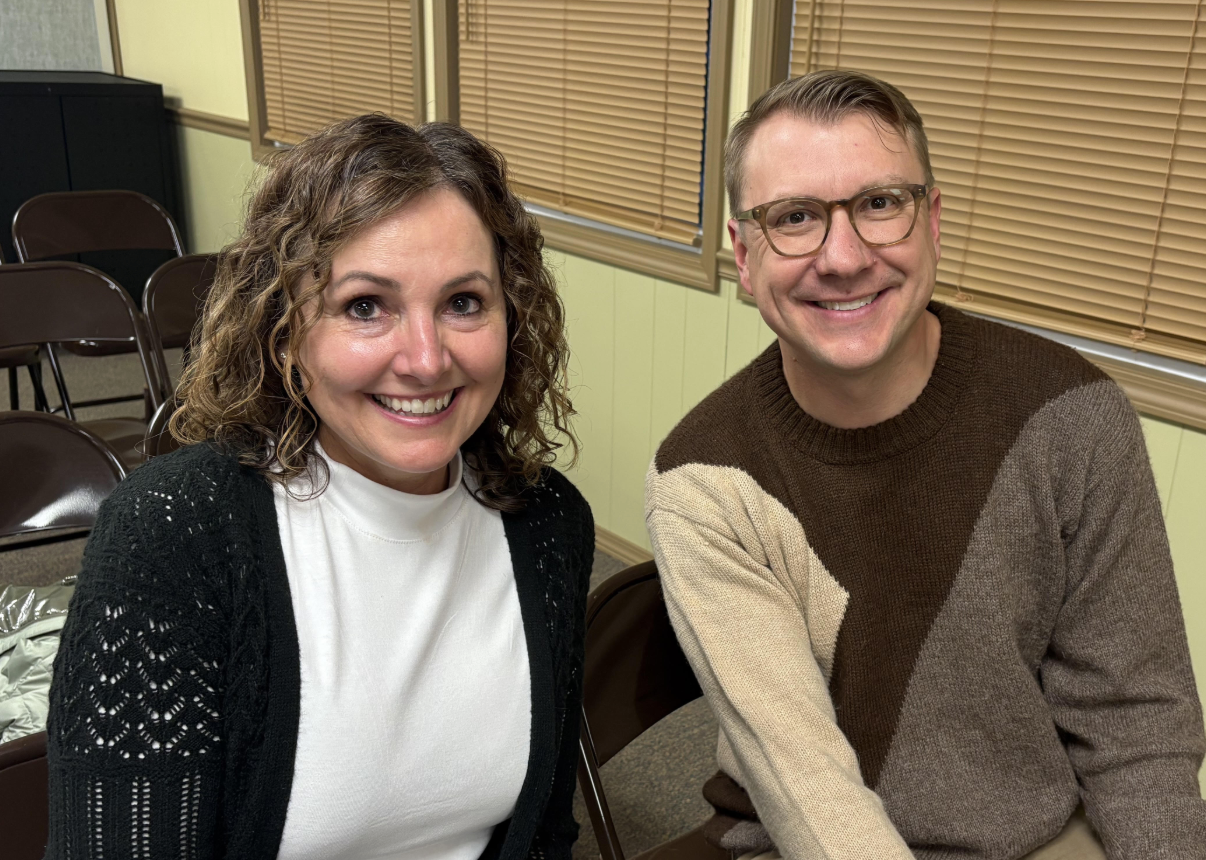
Members of the Community Unit School District 7 Board of Education on Monday night voted unanimously to accept the district’s annual financial report, chose an insurance carrier for property and liability, and authorized the Superintendent to apply for an administrative expenditures waiver.
Following a lengthy executive session, the board also voted 4-1 to expel an elementary student for the remainder of the school year, one of the youngest students the board has ever cited for expulsion. Board member Peyton Bernot cast the sole negative vote. Board members Amanda Ross, Dennis Tiburzi, Kelli Vesper and Weye Schmidt all voted to approve the disciplinary action. Board member Bill Carter was absent. There are no alternative school programs for students below the sixth grade. The expelled student reportedly will have an opportunity to continue classwork via an online program and will be provided with access to school counseling services.
Ken Loy, an accountant with Loy-Miller-Talley Public Accountants, Alton, told board members that the annual audit resulted in a “clean, unmodified” opinion from the auditors, meaning there were no descrepancies in the district’s accounting procedures for the fiscal year that ended June 30. The audit, which is required by state law, contains three opinion letters, all of which were positive in regard to the district’s accounting and fiscal management.
One letter is a general report of the auditors’ findings, indicating the district’s financial records “present fairly, in all material aspects, the assets and liabilities arising from cash transactions of balances of each fund.” Further, the report affirms, “the revenues (the district) received and expenditures it paid for the year . . . (are) in accordance with provisions of the State Board of Education.”
A second letter describes the scope of the auditing process, while a third letter addresses the district’s handling of federal funds. Loy said the federal letter is required when a district receives more than $750,000 in federal funds. For the most recent fiscal year, the district received about $2.5 million from federal sources. While that revenue triggered the need for a separate opinion letter, Loy said the amount was down somewhat from the past few years when the district was receiving COVID recovery funds. As with the general letter, the federal report reflects “a good, clean audit report,” according to Loy.
“All of these opinion letters are good as they have been in the past,” Loy said.
Zeroing in on some details of the 75-page audit, Loy noted that all funds ended the fiscal year in the black, except for the Illinois Municipal Retirement Fund which spent about $33,000 more than it received in revenue. However, Loy said, that deficit was a planned deficit that drew down on surplus balances.
“All of your other funds were positive,” he noted.
The district’s total equalized assessment value, the basis for property tax extensions, increased to $112,324,042 from $103,564,334 a year earlier, which was up from $95,324,343. The property tax extension for 2024, payable in 2025, was $3,599,569. The board typically sets the levy for the upcoming tax year in December.
The per capita tuition charge, determined by dividing enrollment into the total cost of education, increased from $8,892 for fiscal 2024 to $13,248 for fiscal 2025—due, in part, to a dramatic decrease in enrollment. The report notes that enrollment dropped from 1,005 in 2024 to 871 in 2025. That decline in enrollment, according to Loy, resulted in about $2,000 of the increased tuition charge.
Loy said the enrollment erosion is not unusual in downstate school districts.
“Our rural communities are aging,” he said. “We don’t have the size of families we used to have.”
Loy noted that the district’s state financial profile score increased from 3.7 out of 4.0 for fiscal 2024 to 3.8 for the most recently concluded fiscal year. The score identifies the district as a “Recognition Status” district, the highest ranking for financial health and stability.
“Your score went up a little bit because your debt went down,” Loy said. “At the same time, your capacity to borrow went up.”
Of the four criteria the State Board of Education uses to determine the score, CUSD 7 fell short of a 4.0 score in only the area of debt to income ratio.
“If not for the substantial debt, you would have had a perfect score,” Loy noted.
Supt. Shane Owsley told the board that some of the debt that’s bringing down the district’s financial score is lingering debt associated with the loss of Benld Elementary School and the construction of the BenGil Elementary School. The district secured special state legislation allowing it to exceed its normal debt ceiling to deal with the mine subsidence crisis. While that debt does not count toward the district’s debt ceiling, it is included in the financial report.
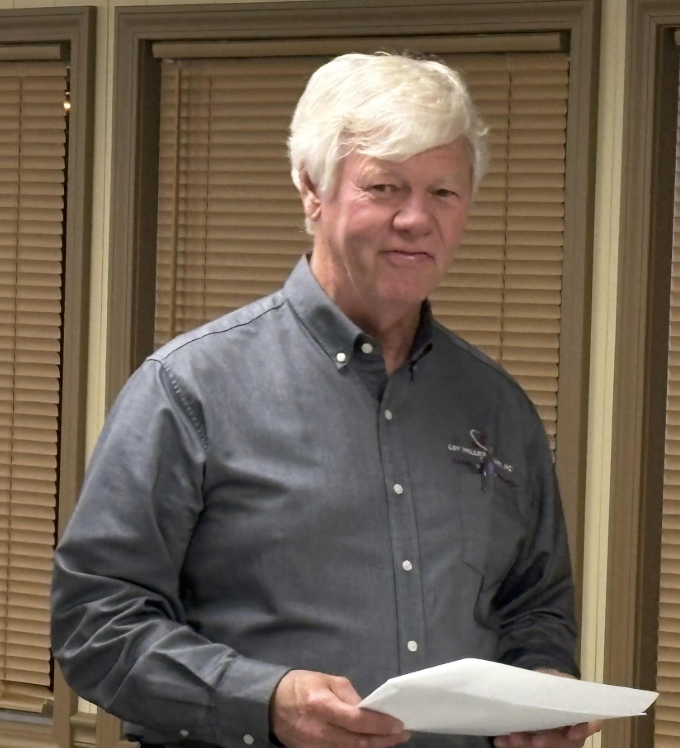
“Overall, you had a good year financially,” Loy said. With a $1.8 million increase in cash and investment balances “you are on solid footing and keeping up with inflation.”
INSURANCE POLICY
After several minutes of discussion, the board opted to switch from Wright Specialty to the Illinois Counties Risk Management Trust to provide property and liability insurance coverage at a cost of $235,061—about 26 percent less than what the district paid in premiums last year to Wright Specialty.
Richard Sedlak, an insurance broker with Schmale Insurance Agency, Belleville presented two options for the board to consider and discussed some of the advantages of one over the other. Wright Specialty proposed a policy similar to what the district currently has, except that the deductible for wind and hail damage was increased from one percent to two percent.
“A two percent deductible for wind and hail on three buildings could be a lot of money,” Owsley advised the board.

Wright’s proposed premium was $318,852—an increase of about 12 percent over what the district paid to Wright last year.
Wright also fell short on mine subsidence coverage, setting a claim limit of $750,000, compared with ICRMT’s limit of $10 million. The Trust also offered replacement costs on roofs up to 20 years in age. Wright’s coverage for earthquake damage topped out at $15 million, compared with ICRMT’s $10 million limit.
“If your concern is with earthquakes, Wright has the better program,” Seldom said. “If you’re more concerned about mine subsidence, the Trust has a better program.”
Sedlak said ICRMT is a stable company that has been in business more than 30 years. “It’s a non-accessible trust,” he said, meaning that if the company experiences a large loss, it cannot come back and reassess policy holders.
Going with ICRMT, Sedlak said, would give the district up to $30 million in coverage on the high school/middle school.
“This will be the first time you’ll have coverage that equals the value of that building,” he said. By going with the Trust, he said, “You’ll be giving up a little earthquake coverage for a lot more subsidence coverage.”
Later in the meeting, the board voted unanimously to approve ICRMT’s proposal for the coming year. The proposal includes Workers Compensation coverage through Zenith Insurance Co., the district’s current Workers Compensation carrier.
BUS PURCHASE
On a motion by Peyton Bernot, seconded by Amanda Ross, the board unanimously accepted Supt. Owsley’s recommendation to spend upward of $153,000 for a new bus from Central States Bus Sales to replace an older bus from the district’s fleet of buses. Owsley said he will pay for the vehicle from the Transportation Fund which was projected to end the year with a surplus of about $564,000. Financing the purchase, he said, would unnecessarily cost the district about six percent in interest.
“My goal is to make sure that none of our buses are more than five years old,” he said, “because that’s when depreciation ends.”
The fleet currently consists of 13 buses, seven of which are older than five years.
“We don’t need 13 buses,” Owsley said, reporting that Transportation Director Tim Besserman said he’d be comfortable with 10 buses. The district currently runs seven full bus routes.
Owsley said two buses already have been surplused, and he expects to surplus two more inoperable buses soon. The surplused vehicles are being scrapped, he said, “because scrap prices right now are more than what we can get for trade-in.”
ADMINISTRATIVE COSTS WAIVER
Following a mandated public hearing, the board approved a resolution directing the Superintendent to apply to the State Board of Education for a waiver freeing the district from keeping increases in administrative costs at five percent or less. ISBE requires a waiver whenever administrative cost increases exceed five percent. Owsley said those costs for this fiscal year are likely to increase by eight percent.

The resolution applies solely to administrative costs that fall under the Superintendent’s office. Owsley said the increased costs are attributable to mandated increases in staff salaries and increasing costs for supplies.
As part of the process, the district was required to notify the Macoupin County Federation of Teachers Local 528, along with state legislators representing the district.
PERSONNEL
The board accepted the resignation of Jennifer Brown as the high school Student Council sponsor, effective at the end of the current school year, after several years of serving in that position.
“She’s been the Student Council sponsor for a lot of years,” Bernot noted. “She was the sponsor when I was in school.”
The measure to accept her resignation also directs the district to post the position as vacant.
Board members also voted unanimously to accept the resignation of Jake Kellebrew as the district’s Bass Fishing coach and to post the position as vacant.
The resignation of Jeremy Smith as high school head baseball coach was also accepted after 16 successful seasons with the team.
DISTRICT FOCUS
During a District Focus segment, Elementary Principal Angela Sandretto introduced new teachers Nick Davio, who teaches music and fifth-grade band, and speech instructor Karen Robertson.
“Students are very excited to be in his classes,” Sandretto said of Davio. “We’re very happy to have him.”
She said the district is “very lucky” have Robertson, whom she described as a “great addition to the elementary staff.”
High School Principal Jill Rosentreter noted newly hired paraprofessionals, Shari Scott and Foli Seferi, along with newly hired custodian Tom Turiglatto. Rosentreter described the paraprofessionals as “self starters.”
GRANTS
Owsley reported the district recently received a $20,000 grant from the Illinois Arts Council to buy equipment for the high school art classroom. He also reported a $15,000 donation from Dr. Ross Billiter, and the receipt of a $50,000 matching grant for facility improvements.
Owsley singled out the administrative staff for praise following the conclusion of Principals Appreciation Week.
“I’d take my team over any other team in the state,” he said. “I can’t thank them enough. They’re here everyday and they care about every student in the district.”
“We have not had a Superintendent who has brought the amount of grant money into our district as you have,” Board President Mark Hayes told Owsley.
OTHER ACTION
In other action, the board approved moving the regular monthly board meeting for December from Monday, Dec. 22, to Monday, Dec. 15, to preclude conflicting with the holidays and winter break.
Comments









Community News
“History Belongs to All of Us”: Focus of Carlinville Community Conversation Series starting May 4


“History Belongs to All of Us,” a three-month series of events and activities commemorating the 250th anniversary of American independence and emphasizing Illinois’ role in seizing liberty for the American people will kick off Monday, May 4, and continue through July 16, 2026.
The series is project of Carlinville Winning Communities funded by a grant from Illinois Humanities. The events will encourage participants to examine and discuss the Declaration of Independence and other primary historical documents through facilitated conversations, according to Mary Tinder, a Macoupin County Historical Society & Carlinville Winning Communities board member.
Carlinville Winning Communities was one of only 13 entities statewide to receive an Illinois Humanities grant to support the Community Conversations Series.
We are fortunate to have received Illinois Humanities funding for this unique project, With 2026 being the 250th anniversary of the signing of the Declaration of Independence and the 100th anniversary of Route 66, it is altogether fitting to explore where we’ve been and where we’re going, as well as to reflect on both and the cultural impact of our independence, Tinder said.
In keeping with the “History Belongs to All of Us” theme, several of the presentations and discussions will emphasize the role of Native Americans and the impact of American independence on Native American and other cultures.
Program topics will be explored through presentations by Illinois Humanities Road Scholars, live readings of historic documents, art, music and discussions. The programs are free to attend and all venues are handicapped accessible.
The series kicks off with “Illinois in the Revolutionary War,” a presentation by local historian and author Tom Emery, at 7 p.m., Monday, May 4, at the Macoupin County Historical Society’s Ruyle Genealogy Building, 920 W. Breckenridge St., Carlinville. Emery will lead a discussion of information included in his most recently published book, Illinois in the Revolutionary War.
“There was more to the war in Illinois than most people realize,” said Emery. “Revolutionary action took place in many parts of the state, and it was a struggle for all involved. It shows how hard many Americans worked for liberty.”
A discussion of Nicholas Welch’s 1812 Land Grant and the Autobiography of Ma-Ka-Tai-Me-She-Kia-Kiak, better known as Black Hawk, leader of the Sauk/Sac Indian tribes, is set for 7 p.m., Monday, June 1, in the Anderson Home parlor on the Macoupin County Historical Society grounds. Under the Land Grant program, the government set aside more than five million acres in western Illinois to compensate American war veterans with large tracts of land. Though Welch never set foot in Illinois, the granting of land to him displaced Black Hawk from his home in the area of present-day Rock Island. The facilitated discussion will focus on original historic documents, juxtaposing Welch’s land grant with Black Hawk’s experience.
Because of the smaller, more intimate venue, reservations are required. RSVP to marytinder1@gmail.com to reserve a seat.
“Relive the Mother Road: The Edwards Trace,” a collective analysis of documents and a look at contemporary research will be led by Illinois Humanities Road Scholar Anna Sielaff, Friday afternoon, June 26, during an Old Fashioned Route 66 Jubilee on the Macoupin County Courthouse lawn. Sielaff will discuss the 3,000-year-old Edwards Trace, used by Native Americans and early Illinois settlers, that stretched from Cahokia to Peoria. Portions of the trace run through Macoupin County, and some sections lay along the original alignment of Route 66. Imagine Rural Arts also will lead an art project in connection with how the trail was marked.
The Old Fashioned Route 66 Jubilee event runs from noon into the evening with food, musical performances, literary presentations, games, food and other activities.
The date is significant for Carlinville and Route 66 since 6/26/26 happens to be our zip code! The Jubilee offers a variety of experiences and taking a deeper look at the Edwards Trace and the Mother Road is an interesting way to explore local history on this unique date and location, Tinder noted.
Continuing on to the July 4th holiday, Macoupin County high school and college students will read the Declaration of Independence aloud in the main courtroom of the historic Macoupin County Courthouse in Carlinville at 10 a.m. The event also will feature a display of more than 30 historic flags provided by the George Rogers Clark Chapter of the Sons of the American Revolution. A facilitated discussion will follow the reading and participants will be invited to sign the “Macoupin County America @ 250 Time Capsule” book. The book will then be on display at the Macoupin County Historical Society, said Andrea Duncan, one of the organizers.
A unique and somewhat mysterious artifact from Macoupin County will be the subject of a presentation at 7 p.m., Monday, July 6, at the Historical Society’s Ruyle Genealogy Building. Sharon Breyden and husband Tommy Breyden will display and discuss the Black Hawk Tablet, uncovered in the 1940s on a farm near Hettick. The odd inscriptions on the lead medallion suggests Black Hawk and an early Macoupin settler formalized an agreement to peacefully coexist in central Illinois.
For the final program of the Carlinville Community Conversations series, Illinois Humanities Road Scholar Kim Sigafus, a member of the Ojibwa Native American tribe, will present “We the Native People” at 7 p.m., Thursday, July 16, at the Historical Society’s Ruyle Genealogy Building. The focus is on Native Americans at the time the Declaration of Independence was signed. The interactive program will use traditional story-telling and music to help audience members understand the groundswell changes in Native American culture and lifestyle resulting from American independence and subsequent western expansion.
For more information and details about the “History Belongs to All of Us” series, contact Carlinville Winning Communities Board members, Andrea Duncan, (217) 204-1446, or Mary Tinder, (217) 825-9699.
Comments
Community News
Macoupin County Public Health Department announces 2026 Gold Standard Award Recipients for food safety and service

Macoupin County Public Health Department (MCPHD) is proud to announce the recipients of the 2026 Gold Standard Award in food safety and service. The Environmental Services department congratulates 33 Macoupin County establishments that earned this prestigious honor, out of 306 licensed food service establishments in the county. This achievement reflects an exceptional commitment to excellence in food safety, sanitation, and customer service.
“We are thrilled to recognize these facilities for maintaining the highest standards of food safety and protecting the health of our community,” said Derrek Tiburzi, MCPHD Environmental Services Director. “Being recognized among this distinguished group highlights the dedication these recipients have to ongoing quality and accountability in food service.”
Gold Standard Award recipients span a diverse range of food service operations, from grocery delis and bakeries to full-service restaurants and hotels. The list below showcases the establishments that met the Gold Standard criteria for 2026:
- South Macoupin Head Start
- Walmart Deli/Bakery
- Medora Intermediate School
- GG’s Smokehouse
- Big Skillet Catering
- Ray’s Tater Wagon
- Carlinville Intermediate School
- Sips Coffee (Carlinville)
- Besserman SuperBowl
- GG’s Smokehouse Mobile Unit
- DeStefane Event Center
- TJ’s Liquor Store
- St. Alphonsus
- Gram-way Cattle & Hay
- Bunker Hill Municipal Building
- North Mac Middle Intermediate & Middle School
- Virden First United Methodist Church
- Carlinville Zion Lutheran Church
- Catholic Charities
- McEuen Farms
- Memorial Christian Church
- Hogan’s Hamlet
- Griffel Farms Beef
- Centennial 6 Farms
- Kazoo Coffee
- Mel’s Place
- Mt. Olive Care Center
- Northwestern Food Pantry
- CVS Pharmacy
- Green Room Gaming
- Virden Community Center
- Camp Hugh
- Beaver Dam Café
This recognition not only highlights the exceptional performers but also reinforces the broader importance of high standards in food service and sanitation. MCPHD’s Food Service and Retail Food Sanitation program continues to monitor and support establishments to ensure safe, healthy dining experiences for Macoupin County residents and visitors.
For more information about MCPHD’s Food Service and Retail Food Sanitation program, please visit: https://mcphd.net/food-service-and-sanitation-program/
Comments

The Benld Library will host a book signing for Bree Ireland’s debut novel, “Eroded Ember” on Saturday, April 18 from 10 to 11 am. Bree Ireland is the pen name for local resident Bree DePoppe. Bree is a young adult author from Gillespie with a strong love for romance and fantasy. Her writing first began at the age of eleven, and by thirteen, she knew storytelling was her passion.
“Eroded Ember” is a young adult fantasy romance set in a small town named Crescent City, CA, where the mystical redwoods meet the ocean. A seventeen-year-old-girl gets accepted as a park ranger in the expansive forest, where she quickly discovers the trees are large enough to hide anything, and she is not as alone as she thinks.
“Eroded Ember” will be released on April 11 through Amazon on and IngramSpark for hardcover and paperback, and the eBook is currently on pre-order on Amazon. The library will have a limited number of books available for purchase the day of the signing.
Although the book is for young adults, all ages will enjoy the story and setting. For more information about the signing please contact the library at 217-835-4045 or visit booksbybree on social media.


