

Monthly Columns
Talking to Kids About Money










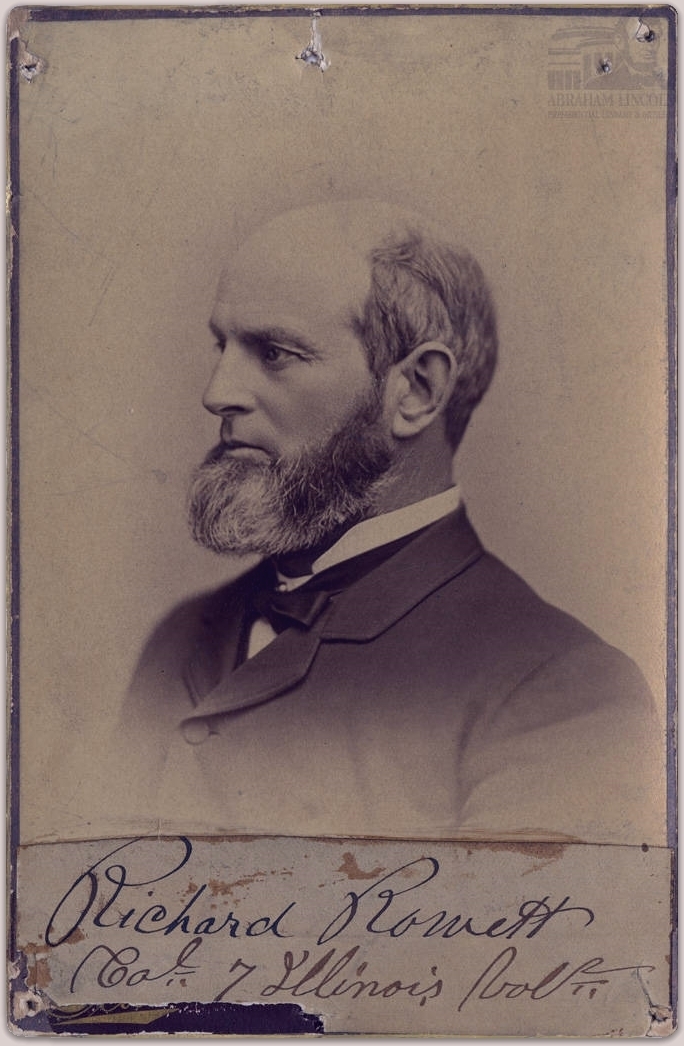
One of the greatest annual events in American sports is the Saturday is the Kentucky Derby, which will be run for the 152nd time this Saturday. One past champion was bred in Macoupin County.
This week marks 137 years since the victory of Spokane, who captured the 1889 Kentucky Derby during the infancy of the event. The horse was bred at “The Meadows,” the farm of Gen. Richard Rowett one mile north of Carlinville.
Rowett horses, and their jockey colors of orange jacket and blue cap, were on tracks throughout the west and south. But Spokane was the greatest production of The Meadows, a nationally recognized breeding ground for thoroughbreds.
In 1885, a prized dark brown horse named Hyder Ali was standing at The Meadows when Rowett bred him to one of his top mares, Interpose. This pairing had produced favorable offspring in the past, including Grey Cloud, a fine racer owned by Noah Armstrong of the Doncaster Ranch near Twin Bridges in the Montana Territory.
Armstrong’s famous stable included such horses as Lord Raglan, the third-place finisher in the 1883 Kentucky Derby. When Rowett offered Interpose for sale late in 1885, Armstrong, familiar with the high quality of Rowett stock, purchased the pregnant mare and her suckling filly, Madelin, for the price of $1,000 and shipped the brood to Montana.
The Doncaster Ranch was known for its spectacular, three-story round barn that featured an indoor track. While in Spokane in the Washington Territory on business, Armstrong received word of the birth of Interpose’s colt. In honor of the city, he named the colt Spokane.
Spokane showed great promise as a two-year-old, winning two of five starts in 1888, and Armstrong entered him in the 1889 Kentucky Derby. Although a premier race, the Derby had not achieved the monumental status it enjoys today.
The race was run on May 9, 1889–a Thursday–in front of a crowd of 25,000, a fraction of the throngs that fill Churchill Downs today.
Home state favorite Proctor Knott was the overwhelming favorite at 1-to-2, while the relatively unknown Spokane was listed at 10-to-1 odds. That was enough for Frank James, brother of outlaw Jessie and a regular at countless tracks.
James, flush with a windfall of $2,400 from an earlier race that day, asked a bookmaker of the odds on Spokane. The reply was “Ten-to-one and the sky’s the limit.” James threw down $5,000 on Spokane, causing the bookmaker to reply, “As far as I’m concerned, that’s the sky!”
Under jockey Thomas Kiley, Spokane edged Proctor Knott by a head, setting a record at 2:34 ½ over the mile-and-a-half layout (it was changed to a mile and a quarter in 1896). He remains the only Kentucky Derby winner ever born in Montana.
Proving the win was no fluke, Spokane again beat Proctor Knott five days later at the Clark Stakes in Louisville. On June 22, Spokane won another key race of the era, the American Derby at Washington Park in Chicago, to become the first horse to win both races in the same season.
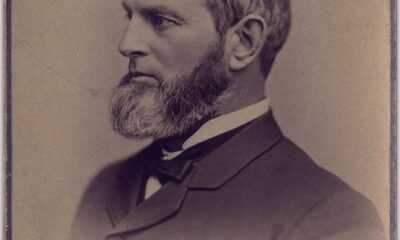
Back in Illinois, Rowett did not live to see the triumph of Spokane, as he died on July 13, 1887. His death was covered on page one of the New York Times the following day.
In addition to breeding, Rowett is also remembered as the first to introduce the true-bred beagle hound to this country from his native England. Prior to that, he was a Civil War officer and state politician.
The only horse actually born in Illinois to win the Kentucky Derby was the 1970 champion, Dust Commander.
Tom Emery of Carlinville, who wrote the award-winning biography Richard Rowett: Thoroughbreds, Beagles, and the Civil War, may be reached at 217-710-8392 or ilcivilwar@yahoo.com.
Comments


Dear residents of Macoupin County,
I am writing to offer my strong and wholehearted recommendation for Quinn Reiher as the next Macoupin County Sheriff. Quinn has proudly served our community as Chief Deputy with the Macoupin County Sheriff’s Department for the past 11 years, bringing a total of 21 years of law enforcement experience.
Throughout his career, Quinn has demonstrated unwavering dedication to public service, professional integrity, and a deep commitment to the safety and well-being of Macoupin County residents. His experience has given him a thorough understanding of county operations, community needs, and the importance of accountability and transparency in public service.
As Chief Deputy, Quinn has consistently shown sound judgement, steady leadership, and the ability to work collaboratively with employees, county officials, and community members alike. His service reflects not only experience, but trust earned through reliability, fairness, and respect for the rule of law.
Together, we have provided stead leadership while carefully managing county resources. Quinn has played an active role in overseeing departmental operations while ensuring expenditures remained within the approved county budget.
His leadership style is grounded in planning, transparency, and respect for public funds – maintaining effective services without unnecessary financial strain on the county.
Quinn’s commitment to Macoupin County is evident in both his professional conduct and his dedication to serving residents with honesty and integrity. I am confident he will continue to serve our county with the same professionalism and care he has demonstrated throughout his career.
I respectfully encourage the residents of Macoupin County to place their confidence and trust in candidate Quinn Reiher for Sheriff.
Shawn Kahl
Macoupin County Sheriff
Comments
In every election cycle, there are positions that attract the headlines and national debates. But here in Macoupin County, there’s one role that directly impacts our daily lives in a way few others do — the sheriff. The decisions made by that office determine how effectively we respond to crime, how we protect our neighborhoods, and how we maintain the trust between law enforcement and the people they serve.
Right now, the challenges facing law enforcement are complex. Rural counties like ours are not immune to the increase in drug trafficking, property crimes, and scams that often target our most vulnerable residents. These problems require more than just a uniform and a patrol car — they require seasoned leadership and the ability to make the right call under pressure.
Ryan Dixon has spent decades building that skill set. Much of his career has been in investigations, where success depends on patience, thoroughness, and an unwavering commitment to justice. Investigative work is rarely glamorous; it’s hours of interviews, evidence gathering, and coordination between multiple agencies. Ryan has done that work, and he’s done it well.
What sets Ryan apart is his ability to balance decisiveness with fairness. He understands that in a county like ours, public trust isn’t given automatically — it’s earned. He’s not the type to make decisions based on politics or popularity; he makes them based on facts, law, and what’s best for the community. That’s the kind of leadership we need in a time when respect for the law and those who enforce it is being tested.
The sheriff’s office is more than an enforcement agency. It’s a symbol of our community’s commitment to safety, fairness, and accountability. We can’t afford to treat this position as an afterthought in the upcoming election. Experience matters, and proven service matters even more.
Macoupin County deserves a sheriff who can step in on day one and lead with confidence. In my view, Ryan Dixon has already demonstrated that he’s up to the task. His years of service, his deep understanding of our communities, and his record of investigative excellence make him a strong choice to guide our sheriff’s department into the future.
We have a lot at stake this year. Let’s make sure the person leading our law enforcement efforts is ready to meet today’s challenges — and tomorrow.
Aaron Stayton
Comments


-
 Community News3 days ago
Illinois treasurer to help Macoupin County residents reclaim $8.6 million in unclaimed funds on May 13 at Gillespie Library
-
 Community News5 days ago
2025 Macoupin County final multiplier announced
-
 Community News5 days ago
Illinois’ role in American Revolution focus of discussion at upcoming MCHS program on May 4
-

 Community News4 days ago
MCHS slates drive-through dinner on May 13