

Monthly Columns
Back in time: Gillespie’s second undefeated team: The 1964 Miners


Written by the late Andy Easton, Sr. for the Gillespie Area News contributed by the Gillespie Public Library
When Gillespie High School started their football program in 1920, little did they know that it would take eight years before they could field a winning team. The 1927 team won the conference and ended the season with an 8-0-1 record. It would take the orange and black another 36 years before they would be undefeated again.
Coach Bill Parmentier put together a team in 1964 that was loaded in talent in the junior-senior class and they were backed up by some outstanding sophomores. The Miners would finish the season with an 8-0-2 record and tie Staunton for the conference championship.
The Miners opened the season by defeating the Feishans 41-0. Dave Hasquin broke through the line and stole the ball from the quarterback Earl Robley and then sprinted 52 yards for the score. Jim Savant kicked the first of his five extra points and Gillespie was up 7-0. Gillespie recovered a Feitshans’ fumble with 16 seconds remaining in the half. A screen pass from Bob Boston to Frank Harris was good and great blocking by Jocko Rolando, Terry Mor and Tom Hollis allowed him to go 48 yards for the touchdown.
In the second half, Boston scored on a sneak, Harris went 20 yards and Rick Tarro 33 yards to score and Steve Benich ended the scoring in the final quarter with a 12-yard run.
Gillespie defeated Hillsboro 32-0 as Boston passed for two scores and ran for another one. Tarro and Harris also scored to put Gillespie up 32-0 at the half. There was no scoring in the second half but the Miners had three touchdowns called back.
Gillespie went to Pittsfield and beat the Saukees 20-6. This was one of the last home games that Pittsfield lost before going on their state-record 64 consecutive victories.
Bucky Chulick scored three times and Adrian Johnson tallied twice as they beat Mount Olive 48-7. Jim Savant kicked six extra points.
Gillespie tied a very good Southwestern team 13-13. Dave Hasquin scored first as he went in from eight yards out. On the ensuing kick-off, the area’s leading scorer Tom Kahl went 82 yards and kicked the point after for a 7-6 lead. Gillespie took the lead back in the second quarter when Boston hit Savant with a seven-yard strike and Savant also kicked the extra point to send Gillespie up at the half, 13-7.
In the third quarter, Kahl got loose again and sprinted 45-yard to tie the game but his extra point was wide. In 1964, Southwestern played in the W.I.V.C. Conference.
The game of the year was played in Staunton. The Miners were without the services of Dave Hasquin and Bob Cunningham who were not dressed because of a school discipline decision. Both teams scored in the first quarter and then battled the remainder of the game. Adrian Johnson busted up the middle and raced 39 yards for Gillespie’s score but the extra point was blocked. Staunton then marched 64 yards and Jim Arico went in from the two. The first run was stopped by Gillespie but they were offside. Roger Kul then went in for the point after but the Bulldogs were called for holding. On the third try a pass was incomplete.
After playing two consecutive tie games, the Miners beat Jerseyville 19-(unknown). Bob Boston hit 13 of 25 passes for 252 yards and two touchdowns. Adrian Johnson went in from the two and Jim Savant had two touchdown catches.
At Carlinville, Boston hit Harris with a 75-yard bomb and Johnson ran 55 yards to setup a nine yard pass from Boston to Pat Wesley. The Cavies scored in the third quarter to cut the lead to 13-7. Dave Hasquin putt the game on ice as he ran 24 yards for the score in the final quarter.
Gillespie scored five touchdowns in the second half to defeat Nokomis 30-12. After a 6-6 tie at the half, Boston threw for two scores and Tarro ran for two. Harris and Hasquin also scored. Boston’s touchdown passes went to Savant for 16 yards and Fulton for 41 yards.
Gillespie finished the undefeated season with a 44-0 victory over Dupo. The Miners scored 38 points in the first half. Johnson scored twice on runs of 27 and three yards while Hasquin got loose on the 34-yard scamper. Tarro went 31 yards and Boston 52 yards for scores. Bucky Chulick went in from 11 yards out and Hasquin scored the final tally with a nine-yard gallop.
The 1964 team was outstanding. They had it all – speed, offense, defense, kicking, and team depth. Gillespie scored 298 points, rushed for 2,140 yards and completed 64 of 114 passes for 1,118 yards and 13 touchdowns. This team has to rank as one of the top five or six teams to represent Gillespie High School.
Comments











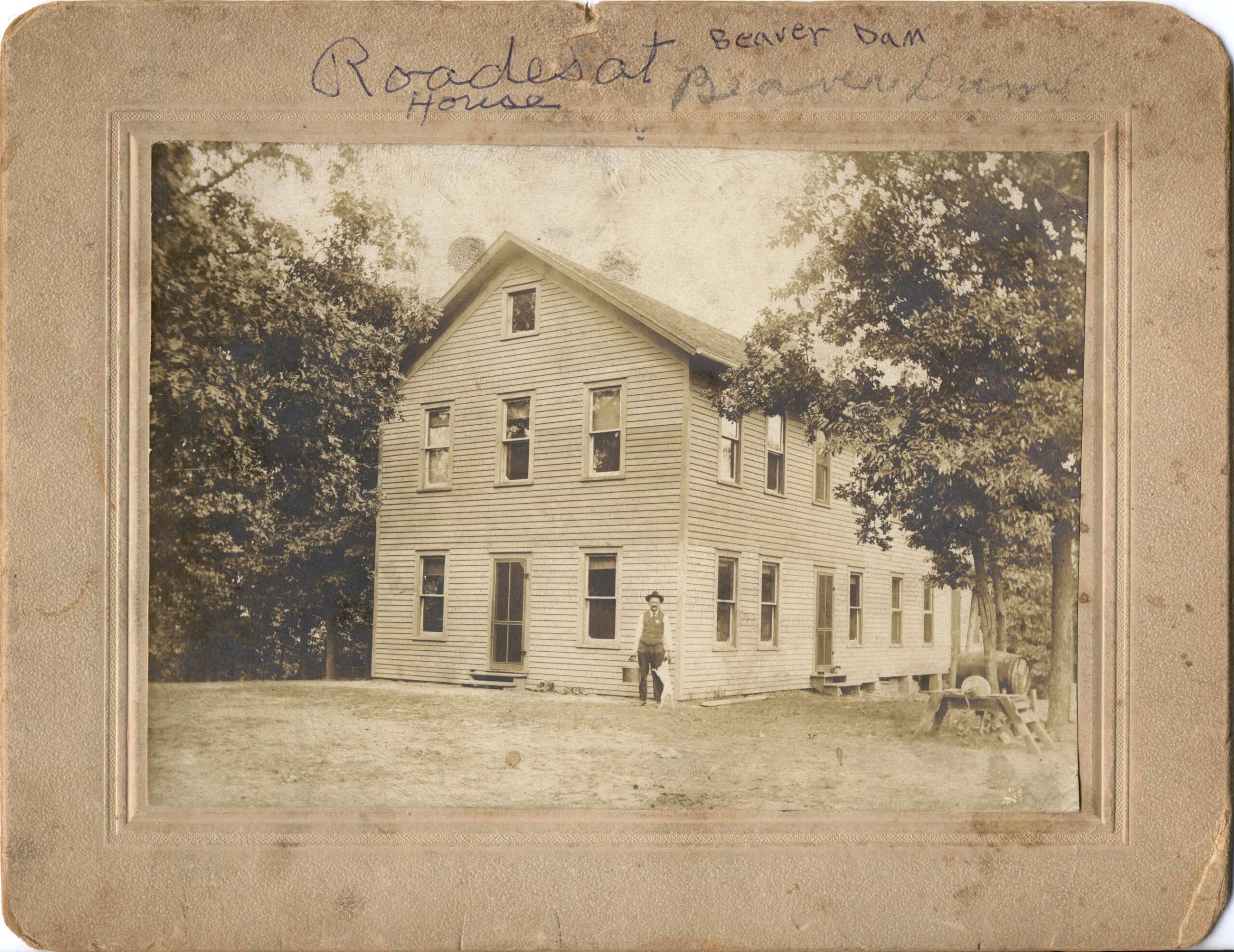
A century ago, a hotel was a landmark at the area that became Beaver Dam State Park in south-central Macoupin County. The structure has lived on in various incarnations since it closed in 1938.
The two-story, sixteen-room building opened for business in 1906. The exterior of the white-frame structure was spartan in appearance, which likely reflected the interior. But the hotel was a favorite stopover for visitors to Beaver Dam Lake.
Advertisements for the hotel were found in the St. Louis, Alton, and Springfield papers and attracted guests from miles around. “There must have been some business there,” said Jim Frank of the Macoupin County Historical Society in an interview before his death in late 2024. “People came from all over to visit the lake and stay in the hotel.”
Frank, who lived south of Beaver Dam, notes that guests arrived by train from Macoupin Station, a mile to the north. “They would be met there by a horse-drawn coach,” he remarked. “That would take them up the hill to the hotel.”
Though the hotel was basic, its surroundings were scenic. A tree-lined lane met visitors on the approach to the building, which sat just inside the current park entrance, on the right.
The hotel was operated by Frank Rhoads and his wife Sarah, whose father, Henry Brayford, played a pivotal role in the development of the lake for recreational purposes.
In 1881, some eighteen leading Carlinville residents leased the property from Brayford to create the Beaver Dam Lake Club. The members spent an estimated $2600 to construct earthen dams on either end of the lake to raise the water level.
Brayford, a coal miner who began to sink a new mine in 1899, died of a lingering illness on Dec. 23, 1901 at age 84. When Frank and Sarah Rhoads inherited the property, they ended the lease to the Carlinville businessmen and built the hotel, which opened as the Beaver Dam Fishing Resort.
The Rhoads, who had no children, took extra steps to ensure their guests’ enjoyment. “Mrs. Rhoads was quite a musician,” said Frank. “There was a grand piano and an organ in the hotel parlor, and she would play those to entertain the visitors.”
It was not the only way in which Sarah Rhoads put her stamp on the hotel. When meals were served, she called the guests and fishermen inside by blowing a large fox horn that sounded across the lake. A taxidermist, her mounts of local wild animals were displayed in the hotel and in its guest rooms. She was also adept at photography and for a fee, provided photos of her guests and their catches of fish.
Guests to the lake could fish for a dollar per day, while lodging was two dollars per night. Outdoor camping was permitted, but Sarah, owing to customs of the day, would not allow female campers.
Some individuals tried to avoid the fishing fee by sneaking into the lake grounds. However, the Rhoads posted watchmen who would collect the fee as they scaled the fences.
The completion of the Shipman Blacktop in 1937 doomed the hotel, as many guests began to spend the day and drive home at night, rather than staying over. Fee fishing continued at the site for several years, In 1947, the state of Illinois acquired the 425-acre property, which opened to the public as a state park the following year.
The second floor of the hotel was torn off, and the rest was converted into a residence for park rangers. The state also reconstructed and raised the earthen dams to create a lake of 56.5 acres. In 1955, additional land was acquired, boosting the park to 737 acres.
When capital improvements were made to Beaver Dam State Park in the late 2000s, the old hotel structure was sold to area residents and moved off site. The building now sits on private property.
Tom Emery is a freelance writer and historical researcher from Carlinville, Ill. He may be reached at 217-710-8392 or ilcivilwar@yahoo.com.
Comments


