

Monthly Columns
Stanford’s Solution for the BenGil Main Street








Dear residents of Macoupin County,
I am writing to offer my strong and wholehearted recommendation for Quinn Reiher as the next Macoupin County Sheriff. Quinn has proudly served our community as Chief Deputy with the Macoupin County Sheriff’s Department for the past 11 years, bringing a total of 21 years of law enforcement experience.
Throughout his career, Quinn has demonstrated unwavering dedication to public service, professional integrity, and a deep commitment to the safety and well-being of Macoupin County residents. His experience has given him a thorough understanding of county operations, community needs, and the importance of accountability and transparency in public service.
As Chief Deputy, Quinn has consistently shown sound judgement, steady leadership, and the ability to work collaboratively with employees, county officials, and community members alike. His service reflects not only experience, but trust earned through reliability, fairness, and respect for the rule of law.
Together, we have provided stead leadership while carefully managing county resources. Quinn has played an active role in overseeing departmental operations while ensuring expenditures remained within the approved county budget.
His leadership style is grounded in planning, transparency, and respect for public funds – maintaining effective services without unnecessary financial strain on the county.
Quinn’s commitment to Macoupin County is evident in both his professional conduct and his dedication to serving residents with honesty and integrity. I am confident he will continue to serve our county with the same professionalism and care he has demonstrated throughout his career.
I respectfully encourage the residents of Macoupin County to place their confidence and trust in candidate Quinn Reiher for Sheriff.
Shawn Kahl
Macoupin County Sheriff
Comments
In every election cycle, there are positions that attract the headlines and national debates. But here in Macoupin County, there’s one role that directly impacts our daily lives in a way few others do — the sheriff. The decisions made by that office determine how effectively we respond to crime, how we protect our neighborhoods, and how we maintain the trust between law enforcement and the people they serve.
Right now, the challenges facing law enforcement are complex. Rural counties like ours are not immune to the increase in drug trafficking, property crimes, and scams that often target our most vulnerable residents. These problems require more than just a uniform and a patrol car — they require seasoned leadership and the ability to make the right call under pressure.
Ryan Dixon has spent decades building that skill set. Much of his career has been in investigations, where success depends on patience, thoroughness, and an unwavering commitment to justice. Investigative work is rarely glamorous; it’s hours of interviews, evidence gathering, and coordination between multiple agencies. Ryan has done that work, and he’s done it well.
What sets Ryan apart is his ability to balance decisiveness with fairness. He understands that in a county like ours, public trust isn’t given automatically — it’s earned. He’s not the type to make decisions based on politics or popularity; he makes them based on facts, law, and what’s best for the community. That’s the kind of leadership we need in a time when respect for the law and those who enforce it is being tested.
The sheriff’s office is more than an enforcement agency. It’s a symbol of our community’s commitment to safety, fairness, and accountability. We can’t afford to treat this position as an afterthought in the upcoming election. Experience matters, and proven service matters even more.
Macoupin County deserves a sheriff who can step in on day one and lead with confidence. In my view, Ryan Dixon has already demonstrated that he’s up to the task. His years of service, his deep understanding of our communities, and his record of investigative excellence make him a strong choice to guide our sheriff’s department into the future.
We have a lot at stake this year. Let’s make sure the person leading our law enforcement efforts is ready to meet today’s challenges — and tomorrow.
Aaron Stayton
Comments

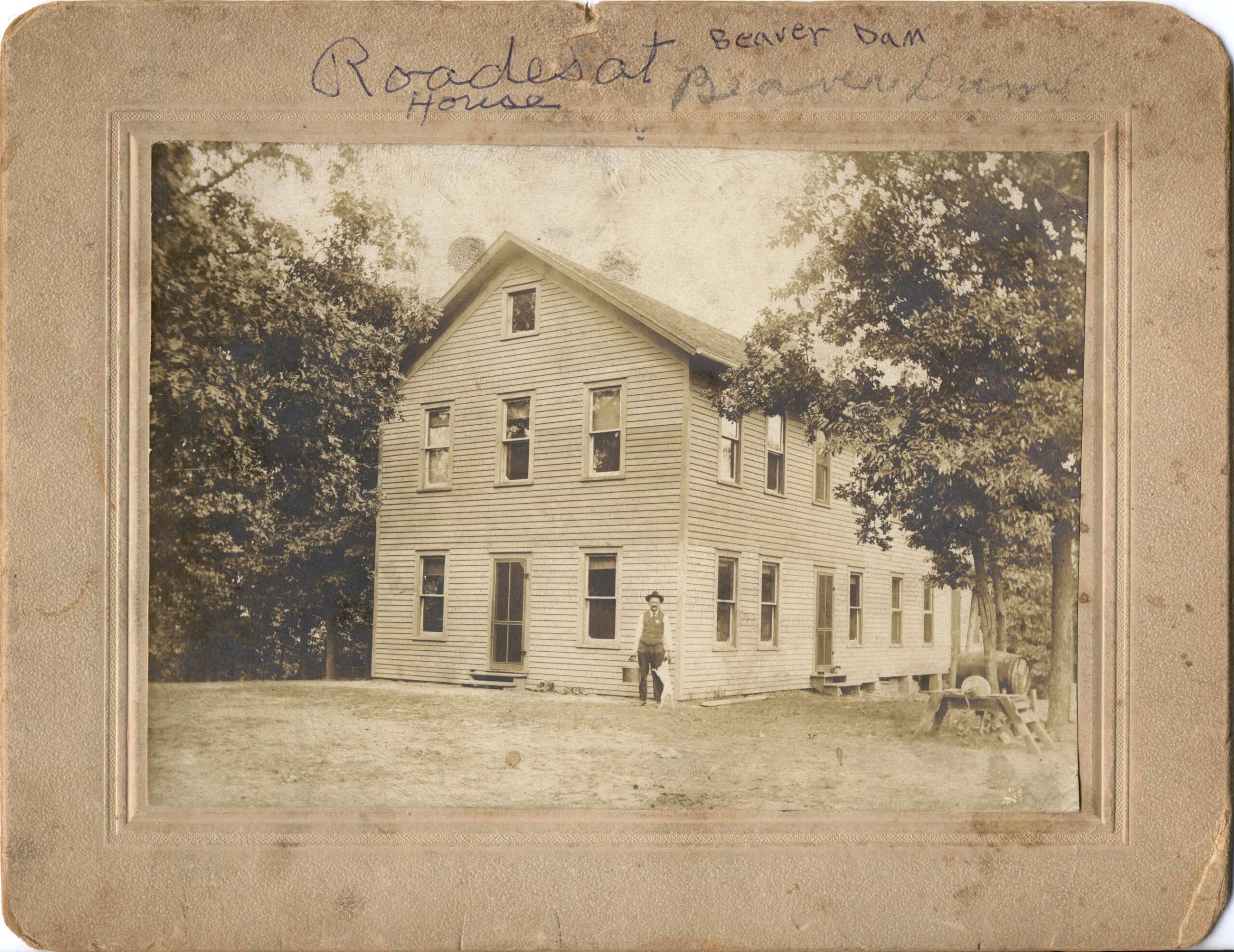
A century ago, a hotel was a landmark at the area that became Beaver Dam State Park in south-central Macoupin County. The structure has lived on in various incarnations since it closed in 1938.
The two-story, sixteen-room building opened for business in 1906. The exterior of the white-frame structure was spartan in appearance, which likely reflected the interior. But the hotel was a favorite stopover for visitors to Beaver Dam Lake.
Advertisements for the hotel were found in the St. Louis, Alton, and Springfield papers and attracted guests from miles around. “There must have been some business there,” said Jim Frank of the Macoupin County Historical Society in an interview before his death in late 2024. “People came from all over to visit the lake and stay in the hotel.”
Frank, who lived south of Beaver Dam, notes that guests arrived by train from Macoupin Station, a mile to the north. “They would be met there by a horse-drawn coach,” he remarked. “That would take them up the hill to the hotel.”
Though the hotel was basic, its surroundings were scenic. A tree-lined lane met visitors on the approach to the building, which sat just inside the current park entrance, on the right.
The hotel was operated by Frank Rhoads and his wife Sarah, whose father, Henry Brayford, played a pivotal role in the development of the lake for recreational purposes.
In 1881, some eighteen leading Carlinville residents leased the property from Brayford to create the Beaver Dam Lake Club. The members spent an estimated $2600 to construct earthen dams on either end of the lake to raise the water level.
Brayford, a coal miner who began to sink a new mine in 1899, died of a lingering illness on Dec. 23, 1901 at age 84. When Frank and Sarah Rhoads inherited the property, they ended the lease to the Carlinville businessmen and built the hotel, which opened as the Beaver Dam Fishing Resort.
The Rhoads, who had no children, took extra steps to ensure their guests’ enjoyment. “Mrs. Rhoads was quite a musician,” said Frank. “There was a grand piano and an organ in the hotel parlor, and she would play those to entertain the visitors.”
It was not the only way in which Sarah Rhoads put her stamp on the hotel. When meals were served, she called the guests and fishermen inside by blowing a large fox horn that sounded across the lake. A taxidermist, her mounts of local wild animals were displayed in the hotel and in its guest rooms. She was also adept at photography and for a fee, provided photos of her guests and their catches of fish.
Guests to the lake could fish for a dollar per day, while lodging was two dollars per night. Outdoor camping was permitted, but Sarah, owing to customs of the day, would not allow female campers.
Some individuals tried to avoid the fishing fee by sneaking into the lake grounds. However, the Rhoads posted watchmen who would collect the fee as they scaled the fences.
The completion of the Shipman Blacktop in 1937 doomed the hotel, as many guests began to spend the day and drive home at night, rather than staying over. Fee fishing continued at the site for several years, In 1947, the state of Illinois acquired the 425-acre property, which opened to the public as a state park the following year.
The second floor of the hotel was torn off, and the rest was converted into a residence for park rangers. The state also reconstructed and raised the earthen dams to create a lake of 56.5 acres. In 1955, additional land was acquired, boosting the park to 737 acres.
When capital improvements were made to Beaver Dam State Park in the late 2000s, the old hotel structure was sold to area residents and moved off site. The building now sits on private property.
Tom Emery is a freelance writer and historical researcher from Carlinville, Ill. He may be reached at 217-710-8392 or ilcivilwar@yahoo.com.


